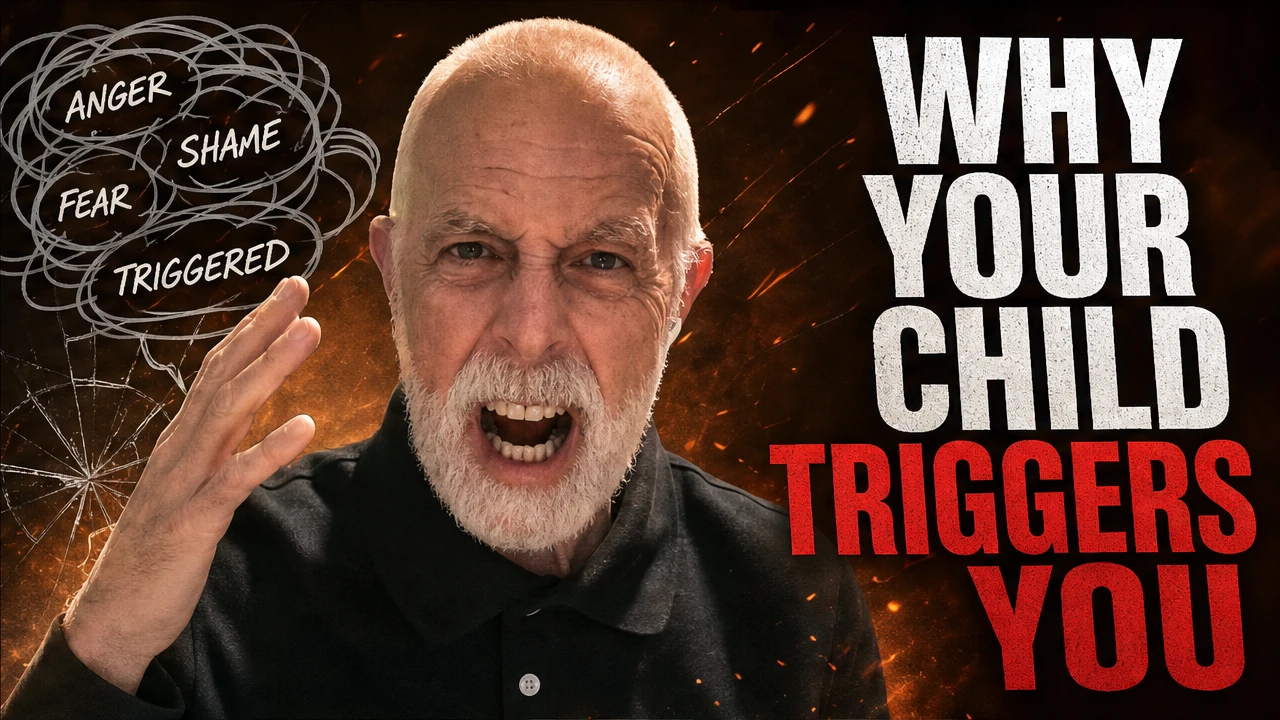

WHY YOUR CHILD TRIGGERS YOU

Self-Led Parenting: Stop Reacting, Start Leading

Key Takeaways

Self-Led Parenting: What It Actually Takes to Stay Steady With Your Kids

Self-led parenting isn’t about staying calm all the time. It’s about noticing when a younger, wounded part of you has taken over and finding your way back to yourself before you respond.

  • When your child triggers you, it’s rarely about what’s happening in the moment. A part of you that didn’t get heard, didn’t get to have feelings, or wasn’t allowed to push back as a kid gets activated instead.
  • Two protectors usually show up first: the manager, who tightens up and controls because it’s scared of judgment, and the firefighter, who explodes because it needs an overwhelming feeling to stop right now.
  • Parenting surfaces old wounds faster than almost anything else in life, which makes it one of the best chances you’ll get to heal them.

Your kid pushes the one button that gets you every time. The tone. The eye roll. The meltdown in the middle of the grocery store. Before you’ve had a second to think, you’re yelling, lecturing, or saying the exact words you swore you’d never say to your own kids. Worse, they sound like something your own parent used to say to you.

That’s not bad parenting. That’s a part of you stepping in and taking the wheel.

I’ve spent years working with couples and families through internal family systems, and one thing keeps showing up: parents carry younger parts of themselves into almost every hard moment with their kids. Self-led parenting means learning to spot when one of those parts has taken over, and finding your way back to the steadier version of yourself before you respond.

What Self-Led Parenting Actually Means

Self-led parenting means responding to your child from your core self, the calm, compassionate, curious part of you, instead of from whichever wounded or protective part just got triggered. In internal family systems work, we call that core part “self.” It’s the healthiest version of who you are: compassionate, curious, caring, confident, connected.

Every one of us also carries wounded parts, formed back when we were kids ourselves. Maybe you weren’t allowed to have big feelings. Maybe you got dismissed when you pushed back. Maybe nobody noticed when you were scared. Those wounds don’t disappear just because you grew up and had kids of your own.

Because they’re painful, your system also built protective parts. Their whole job is to keep you from feeling that old wound again.

Here’s what most parents get wrong about self-led parenting: they think it means staying calm all the time, never raising your voice, never losing it. Losing it happens. A part takes over, and for a minute or an hour, that part is driving instead of you.

Self-led parenting isn’t a prevention plan for that. It’s a skill: noticing the hijack fast and finding your way back to yourself before too much damage gets done. Not perfection. Recognition and return.

So who actually shows up when your child pushes that button? Usually one of two parts.

The Manager and the Firefighter: Why You React the Way You Do

When your child triggers you, it’s typically one of two protectors that shows up first.

The manager is the part that needs things to look a certain way. It worries about what other parents think, whether your child is behaving, whether you’re doing this whole parenting thing right. It tightens up and starts controlling the situation because underneath, it’s scared of being judged or getting it wrong. If that sentence landed for you, you’re not alone. I’d guess it lands for nearly every parent reading this.

The other protector is the firefighter. It doesn’t think, it acts. It’s the part that explodes, threatens, or storms out of the room. It’s not trying to solve anything long-term. It just needs the overwhelming feeling in your body to stop, and reacting big is the fastest way it knows how to discharge that feeling.

I worked with a client recently whose son has what we might call a sugar addiction. He won’t listen to her about it, especially when she isn’t standing right there. She’d get furious with him, then furious with herself for getting furious.

As we worked through it, we found a younger part of her that had been deprived as a child because of her own health problems, and that had worked hard to be as healthy as possible so she could outrun those problems as an adult. When her son eats “out of control,” it doesn’t just activate the part of her that wants to be a good mom. It activates the younger part that once felt scared and out of control in her own body.

Both protectors are guarding the same thing: a younger part of you that once needed something from your own parents and didn’t get it.

How I Watched My Own Part Take Over Through a One-Way Mirror

The clearest example I can give you of this happening is one from my own life, not a client’s.

My oldest daughter started preschool at three, at a school where most of the other kids had already been going since they were two. First day, brand new kid. There was a one-way mirror in the classroom, and I stood there watching her walk up to different groups, trying to play, and getting turned away. Once. Twice. A third time.

I marched straight into the principal’s office and told her she needed to do something about what I was watching happen to my daughter. She asked me one question: had I experienced rejection like that when I was younger? I said sure, but what did that have to do with anything?

Everything, it turned out. My daughter wasn’t in trouble. A little kid inside me, the one who used to be afraid of not fitting in, had gotten activated watching her get turned away. The principal was right. Within a day or two, my daughter had made friends and was doing fine. She never needed me to march into anyone’s office. I did, because a younger part of me needed something.

What settled that day wasn’t just my nerves as a parent. Something in me actually healed. That’s what I mean when I say parenting surfaces your younger parts more than almost anything else in life outside of an intimate relationship, and why it’s also one of the best chances you’ll get to grow. My client with her son and the sugar issue is in the middle of that same process right now, and it’s already changing how she shows up for him.

What To Do Next

You don’t need a one-way mirror or a therapy session to start practicing this. Next time your kid pushes the button:

  • Notice the physical signal first: the tight chest, the heat in your face, the urge to raise your voice. That’s usually the fastest sign a part has taken over.
  • Ask yourself who’s driving. Is this the manager, worried about how things look? The firefighter, needing the feeling to stop right now? Or is this actually you, your calm self, responding to what’s in front of you?
  • Give the part a beat before you speak or act. You don’t have to fix the reaction instantly. You just have to catch it before it runs the whole show.
  • Come back to compassion, curiosity, and connection, and let your response come from there instead.

If you want language for what’s happening inside you when your child triggers you, that’s the work I do with parents and couples, and it’s worth a real conversation.

You’re not failing as a parent every time a part of you takes the wheel. That’s what parts do. Self-led parenting isn’t about arriving at some finished state of calm. It’s about getting faster at noticing the hijack and finding your way back. Every time you do, you’re not just handling that one moment better. You’re healing something older than your kids are.

If this is you, or you know a parent who needs to hear it, pass it along. This is Todd Creager, making the world safe for love.

What if your next argument could bring you closer instead of driving you apart?


Learn how in Todd Creager’s Loving & Connecting Masterclass.
Lifetime access. Real results.

Frequently Asked Questions

Q: What does “self-led parenting” mean? A: Self-led parenting means responding to your child from your calm, core self rather than from a wounded or protective part that’s been triggered. It doesn’t mean never getting upset. It means noticing quickly when a part has taken over and finding your way back before you respond.

Q: Why do I react to my kids the same way my parents reacted to me? A: You carry younger, wounded parts formed in your own childhood, and your child’s behavior can activate them without warning. When that happens, a protective part, often a manager or a firefighter, steps in and reacts the way it learned to react long ago, sometimes echoing the very words your own parent used.

Q: What’s the difference between the “manager” and the “firefighter” in parenting? A: The manager is the part that tightens up and tries to control the situation because it’s afraid of judgment or of getting it wrong. The firefighter is the part that explodes, threatens, or shuts down because it needs an overwhelming feeling to stop immediately. Both are protecting the same younger, wounded part underneath.

Q: Can self-led parenting actually change how my kids experience me? A: Yes. When you’re leading from self instead of a triggered part, you can hold a limit without losing your warmth, say no without shaming your child, and let them have a hard feeling without rushing to fix or shut it down. That shift is often what your child needs most, more than a parent who never gets it wrong.

Q: Is self-led parenting a form of internal family systems (IFS) therapy? A: It’s the parenting application of internal family systems concepts, self, parts, protectors, and wounds, applied to the moments kids trigger in parents. You don’t need formal IFS training to start noticing your own manager and firefighter parts, though working with a therapist familiar with this model can speed up the process.

Popular Post

Contact Us

WHY YOUR CHILD TRIGGERS YOU

Self-Led Parenting: Stop Reacting, Start Leading

Key Takeaways

Self-Led Parenting: What It Actually Takes to Stay Steady With Your Kids

Self-led parenting isn’t about staying calm all the time. It’s about noticing when a younger, wounded part of you has taken over and finding your way back to yourself before you respond.

  • When your child triggers you, it’s rarely about what’s happening in the moment. A part of you that didn’t get heard, didn’t get to have feelings, or wasn’t allowed to push back as a kid gets activated instead.
  • Two protectors usually show up first: the manager, who tightens up and controls because it’s scared of judgment, and the firefighter, who explodes because it needs an overwhelming feeling to stop right now.
  • Parenting surfaces old wounds faster than almost anything else in life, which makes it one of the best chances you’ll get to heal them.

Your kid pushes the one button that gets you every time. The tone. The eye roll. The meltdown in the middle of the grocery store. Before you’ve had a second to think, you’re yelling, lecturing, or saying the exact words you swore you’d never say to your own kids. Worse, they sound like something your own parent used to say to you.

That’s not bad parenting. That’s a part of you stepping in and taking the wheel.

I’ve spent years working with couples and families through internal family systems, and one thing keeps showing up: parents carry younger parts of themselves into almost every hard moment with their kids. Self-led parenting means learning to spot when one of those parts has taken over, and finding your way back to the steadier version of yourself before you respond.

What Self-Led Parenting Actually Means

Self-led parenting means responding to your child from your core self, the calm, compassionate, curious part of you, instead of from whichever wounded or protective part just got triggered. In internal family systems work, we call that core part “self.” It’s the healthiest version of who you are: compassionate, curious, caring, confident, connected.

Every one of us also carries wounded parts, formed back when we were kids ourselves. Maybe you weren’t allowed to have big feelings. Maybe you got dismissed when you pushed back. Maybe nobody noticed when you were scared. Those wounds don’t disappear just because you grew up and had kids of your own.

Because they’re painful, your system also built protective parts. Their whole job is to keep you from feeling that old wound again.

Here’s what most parents get wrong about self-led parenting: they think it means staying calm all the time, never raising your voice, never losing it. Losing it happens. A part takes over, and for a minute or an hour, that part is driving instead of you.

Self-led parenting isn’t a prevention plan for that. It’s a skill: noticing the hijack fast and finding your way back to yourself before too much damage gets done. Not perfection. Recognition and return.

So who actually shows up when your child pushes that button? Usually one of two parts.

The Manager and the Firefighter: Why You React the Way You Do

When your child triggers you, it’s typically one of two protectors that shows up first.

The manager is the part that needs things to look a certain way. It worries about what other parents think, whether your child is behaving, whether you’re doing this whole parenting thing right. It tightens up and starts controlling the situation because underneath, it’s scared of being judged or getting it wrong. If that sentence landed for you, you’re not alone. I’d guess it lands for nearly every parent reading this.

The other protector is the firefighter. It doesn’t think, it acts. It’s the part that explodes, threatens, or storms out of the room. It’s not trying to solve anything long-term. It just needs the overwhelming feeling in your body to stop, and reacting big is the fastest way it knows how to discharge that feeling.

I worked with a client recently whose son has what we might call a sugar addiction. He won’t listen to her about it, especially when she isn’t standing right there. She’d get furious with him, then furious with herself for getting furious.

As we worked through it, we found a younger part of her that had been deprived as a child because of her own health problems, and that had worked hard to be as healthy as possible so she could outrun those problems as an adult. When her son eats “out of control,” it doesn’t just activate the part of her that wants to be a good mom. It activates the younger part that once felt scared and out of control in her own body.

Both protectors are guarding the same thing: a younger part of you that once needed something from your own parents and didn’t get it.

How I Watched My Own Part Take Over Through a One-Way Mirror

The clearest example I can give you of this happening is one from my own life, not a client’s.

My oldest daughter started preschool at three, at a school where most of the other kids had already been going since they were two. First day, brand new kid. There was a one-way mirror in the classroom, and I stood there watching her walk up to different groups, trying to play, and getting turned away. Once. Twice. A third time.

I marched straight into the principal’s office and told her she needed to do something about what I was watching happen to my daughter. She asked me one question: had I experienced rejection like that when I was younger? I said sure, but what did that have to do with anything?

Everything, it turned out. My daughter wasn’t in trouble. A little kid inside me, the one who used to be afraid of not fitting in, had gotten activated watching her get turned away. The principal was right. Within a day or two, my daughter had made friends and was doing fine. She never needed me to march into anyone’s office. I did, because a younger part of me needed something.

What settled that day wasn’t just my nerves as a parent. Something in me actually healed. That’s what I mean when I say parenting surfaces your younger parts more than almost anything else in life outside of an intimate relationship, and why it’s also one of the best chances you’ll get to grow. My client with her son and the sugar issue is in the middle of that same process right now, and it’s already changing how she shows up for him.

What To Do Next

You don’t need a one-way mirror or a therapy session to start practicing this. Next time your kid pushes the button:

  • Notice the physical signal first: the tight chest, the heat in your face, the urge to raise your voice. That’s usually the fastest sign a part has taken over.
  • Ask yourself who’s driving. Is this the manager, worried about how things look? The firefighter, needing the feeling to stop right now? Or is this actually you, your calm self, responding to what’s in front of you?
  • Give the part a beat before you speak or act. You don’t have to fix the reaction instantly. You just have to catch it before it runs the whole show.
  • Come back to compassion, curiosity, and connection, and let your response come from there instead.

If you want language for what’s happening inside you when your child triggers you, that’s the work I do with parents and couples, and it’s worth a real conversation.

You’re not failing as a parent every time a part of you takes the wheel. That’s what parts do. Self-led parenting isn’t about arriving at some finished state of calm. It’s about getting faster at noticing the hijack and finding your way back. Every time you do, you’re not just handling that one moment better. You’re healing something older than your kids are.

If this is you, or you know a parent who needs to hear it, pass it along. This is Todd Creager, making the world safe for love.

What if your next argument could bring you closer instead of driving you apart?


Learn how in Todd Creager’s Loving & Connecting Masterclass.
Lifetime access. Real results.

Frequently Asked Questions

Q: What does “self-led parenting” mean? A: Self-led parenting means responding to your child from your calm, core self rather than from a wounded or protective part that’s been triggered. It doesn’t mean never getting upset. It means noticing quickly when a part has taken over and finding your way back before you respond.

Q: Why do I react to my kids the same way my parents reacted to me? A: You carry younger, wounded parts formed in your own childhood, and your child’s behavior can activate them without warning. When that happens, a protective part, often a manager or a firefighter, steps in and reacts the way it learned to react long ago, sometimes echoing the very words your own parent used.

Q: What’s the difference between the “manager” and the “firefighter” in parenting? A: The manager is the part that tightens up and tries to control the situation because it’s afraid of judgment or of getting it wrong. The firefighter is the part that explodes, threatens, or shuts down because it needs an overwhelming feeling to stop immediately. Both are protecting the same younger, wounded part underneath.

Q: Can self-led parenting actually change how my kids experience me? A: Yes. When you’re leading from self instead of a triggered part, you can hold a limit without losing your warmth, say no without shaming your child, and let them have a hard feeling without rushing to fix or shut it down. That shift is often what your child needs most, more than a parent who never gets it wrong.

Q: Is self-led parenting a form of internal family systems (IFS) therapy? A: It’s the parenting application of internal family systems concepts, self, parts, protectors, and wounds, applied to the moments kids trigger in parents. You don’t need formal IFS training to start noticing your own manager and firefighter parts, though working with a therapist familiar with this model can speed up the process.

Reader Interactions

Leave a Reply

Your email address will not be published. Required fields are marked *