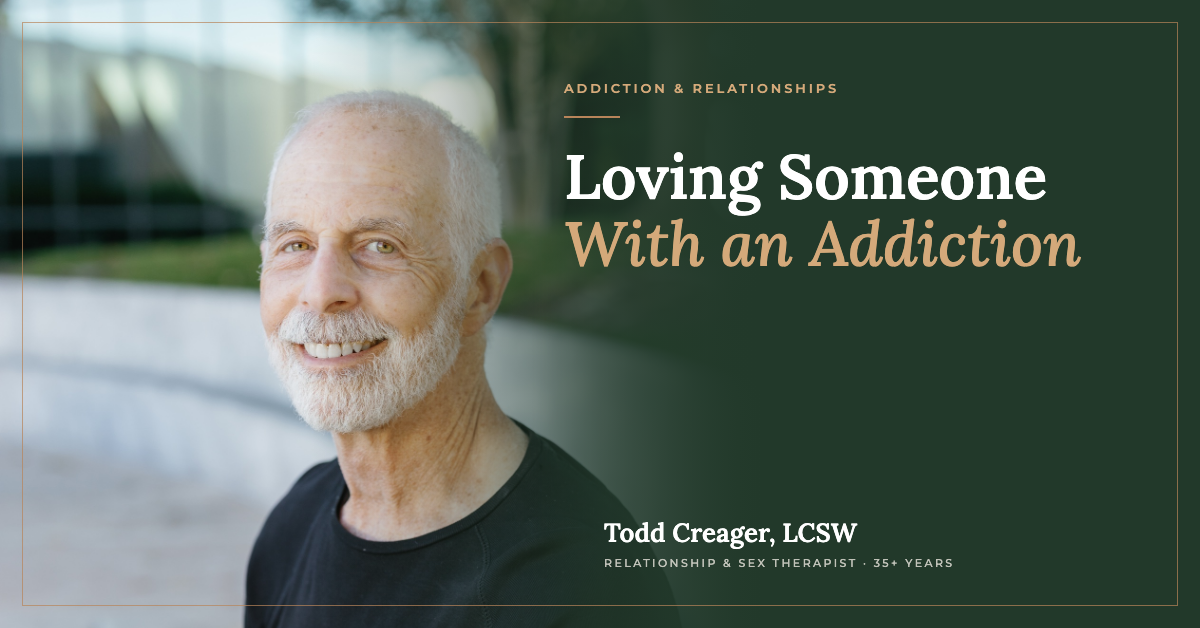

Loving Someone With an Addiction

Loving Someone With an Addiction

Picture of Todd Creager

Todd Creager

Todd Creager, LCSW, LMFT, is a marriage, relationship and sex therapist who helps couples heal from infidelity, betrayal and years of disconnection, so they can build a long, hot marriage instead of ending one.

35+ years in practice. Certified EMDR therapist. Adjunct lecturer, USC School of Social Work. Bestselling author of The Long, Hot Marriage and Love, Sex and Karaoke. Married, happily, for a long time.

Learn more about Todd: https://toddcreager.com/about/

Ready to talk? See how Todd works with couples and individuals or reach out for a 20-minute phone consult.

KEY TAKEAWAYS

If you love someone with an addiction, your own experience matters as much as theirs. Here’s what actually helps:

  • It’s genuinely common to lose touch with your own needs while focused on managing a partner’s addiction — this pattern has a name: codependency.
  • Supporting someone doesn’t mean managing their recovery for them, and the distinction matters more than it sounds.
  • Guilt about having your own needs while your partner struggles is common, but it doesn’t mean your needs are less valid.
  • You need your own support system, separate from your partner’s recovery process, not as an afterthought.

Loving someone with an addiction is its own kind of exhausting, one that often goes unacknowledged because all the attention, understandably, goes toward the person struggling with the addiction itself. I’m Todd Creager, and I want to talk directly to you — the partner — about what you’re carrying.

What Loving Someone With an Addiction Actually Does to You

It’s common to develop hypervigilance — constantly monitoring your partner’s mood, behavior, or whereabouts for signs of relapse or trouble, which is exhausting in a way that’s hard to explain to someone who hasn’t lived it.

Many partners describe managing their partner’s emotions as a full-time, unspoken job — trying to prevent triggers, absorbing moods, sometimes covering consequences without fully realizing that’s what they’ve taken on. This role often develops so gradually it’s hard to pinpoint when it started.

What most people don’t expect: it’s genuinely common to lose touch with your own needs, interests, and identity while focused on managing the situation. This pattern has a name — codependency — and it deserves real attention, not dismissal as simply “being supportive.”

The Difference Between Supporting and Managing

Supporting someone’s recovery means encouraging their own efforts, holding your own boundaries, and taking care of yourself alongside them. Managing their recovery means taking on responsibility for their choices — covering consequences, monitoring behavior, essentially doing the emotional work of recovery that only they can actually do.

This distinction matters because managing tends to exhaust the partner without actually helping the addicted person recover — in some cases, it can even prolong the addiction by softening its natural consequences.

What most partners don’t realize: stepping back from managing isn’t abandonment. It’s often what allows both people — the addicted partner and you — to actually do their own necessary work instead of you doing it for both of you.

Taking Care of Yourself Without Guilt

Guilt about having your own needs while your partner struggles with something serious is extremely common — it can feel selfish to prioritize your own wellbeing when they’re dealing with so much. I want to be direct: your needs are not less valid because your partner is struggling.

Your own individual support — therapy, a support group like Al-Anon or a similar program, trusted friends — matters as much as your partner’s recovery process, not as a lesser concern that comes after theirs.

In my experience, partners who maintain their own support and sense of self tend to be in a stronger position to support their partner’s recovery long-term, precisely because they’re not running on empty themselves.

What to Do Next

If you’re loving someone with an addiction right now, here’s where to start:

  • Notice where you’ve shifted from supporting to managing — covering consequences, monitoring behavior.
  • Identify one need of your own you’ve set aside, and take a small step toward addressing it this week.
  • Consider a support group or individual therapy for yourself, separate from your partner’s recovery process.
  • Release the guilt — your needs are not less valid because your partner is struggling.

Your first step: reach out for your own support, not just information about your partner’s addiction.

You deserve support too, not just information about how to help someone else. I offer individual therapy for partners navigating a loved one’s addiction, in my Huntington Beach office and virtually. Book a free consultation.

For the bigger picture on how couples navigate this together, my complete guide to addiction and relationships walks through it.

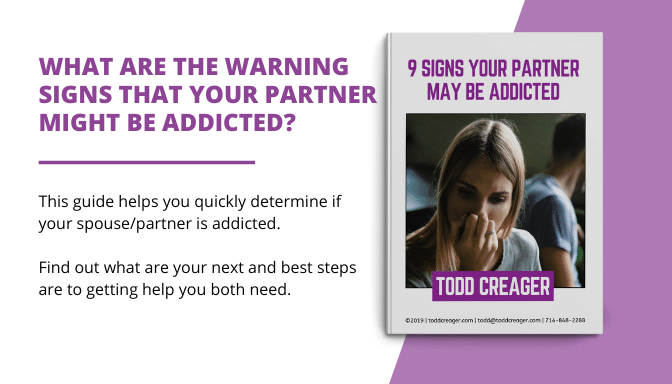
Are you concerned that your partner’s addiction is destroying your relationship?

This guide will help you quickly determine if your spouse/partner is addicted, and determine the next and best steps you need to take so that you can save your relationship.
Frequently Asked Questions

Q: What is codependency in a relationship with an addicted partner?

A: It’s a pattern where the non-addicted partner develops hypervigilance, manages their partner’s emotions or consequences, and loses touch with their own needs, often without fully realizing the shift has happened.

Q: How do I support a partner with an addiction without enabling them?

A: Support means encouraging their own recovery efforts while holding your own boundaries and caring for yourself. Managing — covering consequences or monitoring behavior — can actually prolong the addiction rather than help it.

Q: Is it selfish to take care of myself while my partner struggles with addiction?

A: No. Your needs remain valid regardless of what your partner is going through, and maintaining your own support tends to put you in a stronger position to support them long-term.

Q: Do partners of addicted people need their own therapy?

A: Yes. Individual support, separate from the addicted partner’s recovery process, helps address the patterns — like hypervigilance or lost sense of self — that develop from living alongside an addiction.

Loving Someone With an Addiction

Loving Someone With an Addiction

KEY TAKEAWAYS

If you love someone with an addiction, your own experience matters as much as theirs. Here’s what actually helps:

  • It’s genuinely common to lose touch with your own needs while focused on managing a partner’s addiction — this pattern has a name: codependency.
  • Supporting someone doesn’t mean managing their recovery for them, and the distinction matters more than it sounds.
  • Guilt about having your own needs while your partner struggles is common, but it doesn’t mean your needs are less valid.
  • You need your own support system, separate from your partner’s recovery process, not as an afterthought.

Loving someone with an addiction is its own kind of exhausting, one that often goes unacknowledged because all the attention, understandably, goes toward the person struggling with the addiction itself. I’m Todd Creager, and I want to talk directly to you — the partner — about what you’re carrying.

What Loving Someone With an Addiction Actually Does to You

It’s common to develop hypervigilance — constantly monitoring your partner’s mood, behavior, or whereabouts for signs of relapse or trouble, which is exhausting in a way that’s hard to explain to someone who hasn’t lived it.

Many partners describe managing their partner’s emotions as a full-time, unspoken job — trying to prevent triggers, absorbing moods, sometimes covering consequences without fully realizing that’s what they’ve taken on. This role often develops so gradually it’s hard to pinpoint when it started.

What most people don’t expect: it’s genuinely common to lose touch with your own needs, interests, and identity while focused on managing the situation. This pattern has a name — codependency — and it deserves real attention, not dismissal as simply “being supportive.”

The Difference Between Supporting and Managing

Supporting someone’s recovery means encouraging their own efforts, holding your own boundaries, and taking care of yourself alongside them. Managing their recovery means taking on responsibility for their choices — covering consequences, monitoring behavior, essentially doing the emotional work of recovery that only they can actually do.

This distinction matters because managing tends to exhaust the partner without actually helping the addicted person recover — in some cases, it can even prolong the addiction by softening its natural consequences.

What most partners don’t realize: stepping back from managing isn’t abandonment. It’s often what allows both people — the addicted partner and you — to actually do their own necessary work instead of you doing it for both of you.

Taking Care of Yourself Without Guilt

Guilt about having your own needs while your partner struggles with something serious is extremely common — it can feel selfish to prioritize your own wellbeing when they’re dealing with so much. I want to be direct: your needs are not less valid because your partner is struggling.

Your own individual support — therapy, a support group like Al-Anon or a similar program, trusted friends — matters as much as your partner’s recovery process, not as a lesser concern that comes after theirs.

In my experience, partners who maintain their own support and sense of self tend to be in a stronger position to support their partner’s recovery long-term, precisely because they’re not running on empty themselves.

What to Do Next

If you’re loving someone with an addiction right now, here’s where to start:

  • Notice where you’ve shifted from supporting to managing — covering consequences, monitoring behavior.
  • Identify one need of your own you’ve set aside, and take a small step toward addressing it this week.
  • Consider a support group or individual therapy for yourself, separate from your partner’s recovery process.
  • Release the guilt — your needs are not less valid because your partner is struggling.

Your first step: reach out for your own support, not just information about your partner’s addiction.

You deserve support too, not just information about how to help someone else. I offer individual therapy for partners navigating a loved one’s addiction, in my Huntington Beach office and virtually. Book a free consultation.

For the bigger picture on how couples navigate this together, my complete guide to addiction and relationships walks through it.

Are you concerned that your partner’s addiction is destroying your relationship?

This guide will help you quickly determine if your spouse/partner is addicted, and determine the next and best steps you need to take so that you can save your relationship.

Frequently Asked Questions

Q: What is codependency in a relationship with an addicted partner?

A: It’s a pattern where the non-addicted partner develops hypervigilance, manages their partner’s emotions or consequences, and loses touch with their own needs, often without fully realizing the shift has happened.

Q: How do I support a partner with an addiction without enabling them?

A: Support means encouraging their own recovery efforts while holding your own boundaries and caring for yourself. Managing — covering consequences or monitoring behavior — can actually prolong the addiction rather than help it.

Q: Is it selfish to take care of myself while my partner struggles with addiction?

A: No. Your needs remain valid regardless of what your partner is going through, and maintaining your own support tends to put you in a stronger position to support them long-term.

Q: Do partners of addicted people need their own therapy?

A: Yes. Individual support, separate from the addicted partner’s recovery process, helps address the patterns — like hypervigilance or lost sense of self — that develop from living alongside an addiction.
Reader Interactions

Leave a Reply

Your email address will not be published. Required fields are marked *