
Help for Addiction in Relationships

Help for Addiction in Relationships

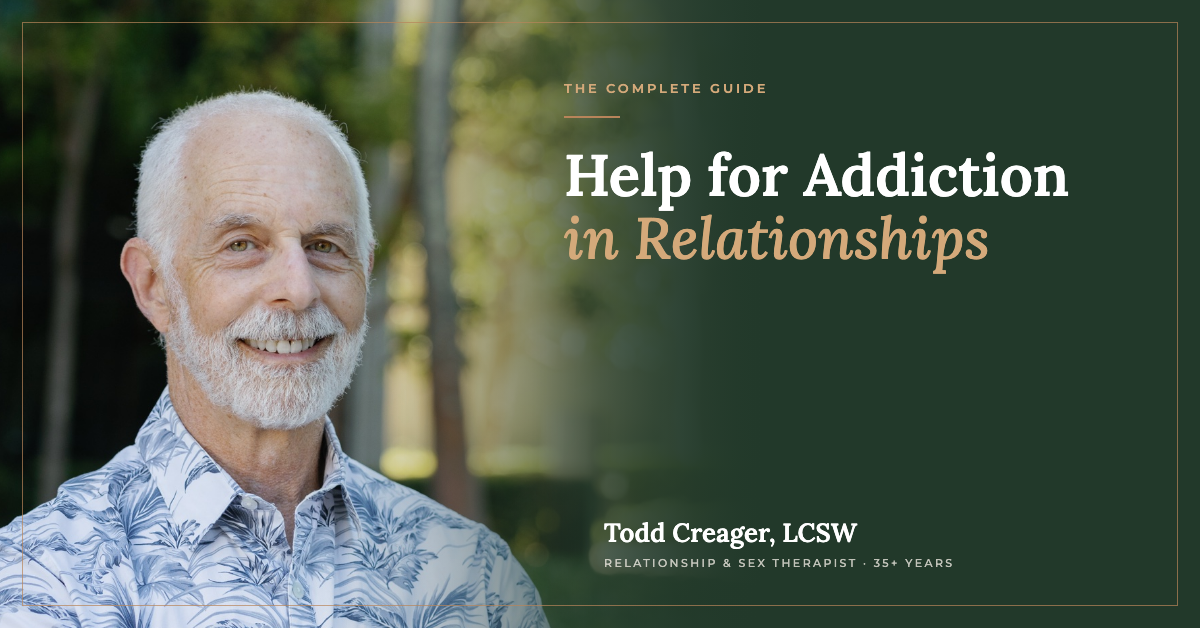
Picture of Todd Creager

Todd Creager

Todd Creager, LCSW, LMFT, is a marriage, relationship and sex therapist who helps couples heal from infidelity, betrayal and years of disconnection, so they can build a long, hot marriage instead of ending one.

35+ years in practice. Certified EMDR therapist. Adjunct lecturer, USC School of Social Work. Bestselling author of The Long, Hot Marriage and Love, Sex and Karaoke. Married, happily, for a long time.

Learn more about Todd: https://toddcreager.com/about/

Ready to talk? See how Todd works with couples and individuals or reach out for a 20-minute phone consult.

KEY TAKEAWAYS

If addiction is affecting your relationship, here’s what’s actually true about navigating it:

  • Addiction rarely stays contained to one person — it reshapes communication, trust, and roles for the whole relationship.
  • Partners of someone with an addiction often develop their own patterns, including codependency, that need their own attention alongside the addiction itself.
  • Shame and secrecy tend to fuel addiction more than almost anything else, which is why isolation makes recovery harder.
  • Recovery is a relationship project as much as an individual one — couples who navigate it together tend to fare better than those who treat it as one partner’s problem alone.

Hi — I’m Todd Creager. Addiction, whatever form it takes — substances, gambling, sex or porn compulsions — rarely stays contained to the person experiencing it. It reshapes the relationship around it: trust erodes, communication breaks down, and both partners often end up carrying more shame than either of them can name out loud.

In more than 35 years of this work, I’ve helped individuals and couples navigate addiction and its aftermath. This page walks through how addiction actually affects relationships, and what real recovery — for the addicted partner and the relationship itself — looks like.

How Addiction Actually Reshapes a Relationship

Addiction changes far more than the specific behavior involved. It changes communication — secrecy and deception often become normalized, even in relationships that were otherwise honest. It changes trust, sometimes severely, especially when a partner has been actively deceived, as is common with sex or porn addiction

It also changes roles within the relationship. The non-addicted partner often becomes a manager — tracking behavior, managing consequences, sometimes covering for the addiction without fully realizing that’s what they’re doing. This role shift happens gradually and rarely gets named directly until it’s deeply entrenched.

What most people don’t expect: by the time a couple seeks help, the relationship damage often extends well beyond the addictive behavior itself — into resentment, exhaustion, and a loss of the partnership the couple once had. Recovery has to address both layers, not just the addiction.

What Happens to the Partner — Codependency and Its Own Toll

Partners of someone with an addiction often develop their own patterns in response — hypervigilance, managing the addicted partner’s emotions to prevent relapse, or losing touch with their own needs entirely while focused on managing the situation. This is often what’s meant by codependency, and it deserves its own attention, not just as a footnote to the addiction.

It’s genuinely common for the non-addicted partner to feel guilty for having needs of their own, as if focusing on their own wellbeing is somehow selfish given what their partner is going through. I want to be direct about this: your own healing matters just as much as your partner’s recovery, not as a lesser concern.

What most people don’t realize: partners often need their own individual support, separate from couples work, to address the patterns that developed in response to living alongside an addiction — this isn’t optional or secondary to the addicted partner’s recovery.

How Real Recovery Works — For the Addiction and the Relationship

Shame and secrecy fuel addiction more than almost anything else — the isolation that shame creates makes the addictive behavior easier to hide and harder to interrupt. Recovery that only addresses the behavior, without addressing the shame underneath it, tends not to hold long-term.

For the relationship, rebuilding trust after addiction follows many of the same principles as rebuilding trust after any major betrayal — consistency over time, transparency that’s collaborative rather than punitive, and patience with a process that doesn’t happen on a fixed schedule.

Recovery works best as a relationship project, not an individual assignment handed to the addicted partner alone. Couples who navigate this together — each doing their own piece of the work — tend to come through it with a stronger, more honest relationship than the one that existed before.

What to Do Next

If addiction is part of your relationship right now, here’s where to start:

  • Notice if you’ve taken on a management role — tracking, covering, managing consequences — without fully naming it to yourself.
  • Consider your own individual support, separate from the addicted partner’s recovery process.
  • Remember that shame and secrecy fuel addiction — isolation, even well-intentioned, tends to make things harder, not easier.
  • Approach recovery as something the relationship navigates together, not a problem handed entirely to one partner.

Your first step: reach out for a consultation — for yourself, your partner, or both of you together.

Addiction reshapes a relationship, but it doesn’t have to define its future. I offer individual and couples therapy addressing addiction and its impact, in my Huntington Beach office and virtually, anywhere. Book a free consultation.

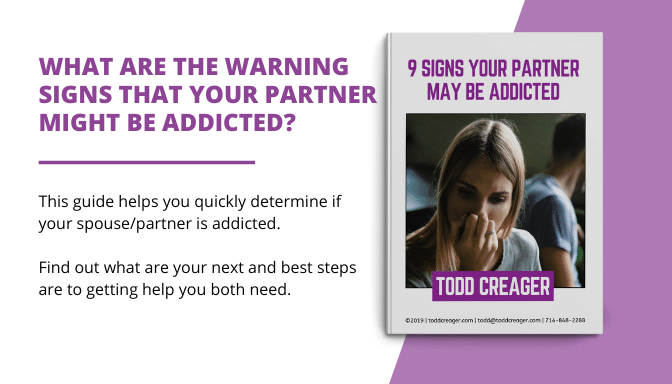
Are you concerned that your partner’s addiction is destroying your relationship?

This guide will help you quickly determine if your spouse/partner is addicted, and determine the next and best steps you need to take so that you can save your relationship.
Frequently Asked Questions

Q: How does addiction affect a relationship?

A: It reshapes communication, often introducing secrecy and deception, erodes trust, and shifts roles — the non-addicted partner often becomes a manager of behavior and consequences without fully realizing the shift.

Q: What is codependency in a relationship with addiction?

A: It’s a pattern where the non-addicted partner develops hypervigilance, manages the addicted partner’s emotions to prevent relapse, or loses touch with their own needs while focused on the situation. It deserves its own dedicated attention.

Q: Can a relationship survive addiction?

A: Yes, especially when both the addiction and its impact on the relationship are addressed together. Couples who navigate recovery as a shared project tend to come through with a stronger, more honest relationship.

Q: Does the partner of someone with an addiction need their own support?

A: Yes. Partners often develop their own patterns in response to living alongside an addiction, and individual support to address those patterns is important, not secondary to the addicted partner’s recovery.

Help for Addiction in Relationships

Help for Addiction in Relationships

KEY TAKEAWAYS

If addiction is affecting your relationship, here’s what’s actually true about navigating it:

  • Addiction rarely stays contained to one person — it reshapes communication, trust, and roles for the whole relationship.
  • Partners of someone with an addiction often develop their own patterns, including codependency, that need their own attention alongside the addiction itself.
  • Shame and secrecy tend to fuel addiction more than almost anything else, which is why isolation makes recovery harder.
  • Recovery is a relationship project as much as an individual one — couples who navigate it together tend to fare better than those who treat it as one partner’s problem alone.

Hi — I’m Todd Creager. Addiction, whatever form it takes — substances, gambling, sex or porn compulsions — rarely stays contained to the person experiencing it. It reshapes the relationship around it: trust erodes, communication breaks down, and both partners often end up carrying more shame than either of them can name out loud.

In more than 35 years of this work, I’ve helped individuals and couples navigate addiction and its aftermath. This page walks through how addiction actually affects relationships, and what real recovery — for the addicted partner and the relationship itself — looks like.

How Addiction Actually Reshapes a Relationship

Addiction changes far more than the specific behavior involved. It changes communication — secrecy and deception often become normalized, even in relationships that were otherwise honest. It changes trust, sometimes severely, especially when a partner has been actively deceived, as is common with sex or porn addiction

It also changes roles within the relationship. The non-addicted partner often becomes a manager — tracking behavior, managing consequences, sometimes covering for the addiction without fully realizing that’s what they’re doing. This role shift happens gradually and rarely gets named directly until it’s deeply entrenched.

What most people don’t expect: by the time a couple seeks help, the relationship damage often extends well beyond the addictive behavior itself — into resentment, exhaustion, and a loss of the partnership the couple once had. Recovery has to address both layers, not just the addiction.

What Happens to the Partner — Codependency and Its Own Toll

Partners of someone with an addiction often develop their own patterns in response — hypervigilance, managing the addicted partner’s emotions to prevent relapse, or losing touch with their own needs entirely while focused on managing the situation. This is often what’s meant by codependency, and it deserves its own attention, not just as a footnote to the addiction.

It’s genuinely common for the non-addicted partner to feel guilty for having needs of their own, as if focusing on their own wellbeing is somehow selfish given what their partner is going through. I want to be direct about this: your own healing matters just as much as your partner’s recovery, not as a lesser concern.

What most people don’t realize: partners often need their own individual support, separate from couples work, to address the patterns that developed in response to living alongside an addiction — this isn’t optional or secondary to the addicted partner’s recovery.
How Real Recovery Works — For the Addiction and the Relationship

Shame and secrecy fuel addiction more than almost anything else — the isolation that shame creates makes the addictive behavior easier to hide and harder to interrupt. Recovery that only addresses the behavior, without addressing the shame underneath it, tends not to hold long-term.

For the relationship, rebuilding trust after addiction follows many of the same principles as rebuilding trust after any major betrayal — consistency over time, transparency that’s collaborative rather than punitive, and patience with a process that doesn’t happen on a fixed schedule.

Recovery works best as a relationship project, not an individual assignment handed to the addicted partner alone. Couples who navigate this together — each doing their own piece of the work — tend to come through it with a stronger, more honest relationship than the one that existed before.

What to Do Next

If addiction is part of your relationship right now, here’s where to start:

  • Notice if you’ve taken on a management role — tracking, covering, managing consequences — without fully naming it to yourself.
  • Consider your own individual support, separate from the addicted partner’s recovery process.
  • Remember that shame and secrecy fuel addiction — isolation, even well-intentioned, tends to make things harder, not easier.
  • Approach recovery as something the relationship navigates together, not a problem handed entirely to one partner.

Your first step: reach out for a consultation — for yourself, your partner, or both of you together.

Addiction reshapes a relationship, but it doesn’t have to define its future. I offer individual and couples therapy addressing addiction and its impact, in my Huntington Beach office and virtually, anywhere. Book a free consultation.

Are you concerned that your partner’s addiction is destroying your relationship?

This guide will help you quickly determine if your spouse/partner is addicted, and determine the next and best steps you need to take so that you can save your relationship.

Frequently Asked Questions

Q: How does addiction affect a relationship?

A: It reshapes communication, often introducing secrecy and deception, erodes trust, and shifts roles — the non-addicted partner often becomes a manager of behavior and consequences without fully realizing the shift.

Q: What is codependency in a relationship with addiction?

A: It’s a pattern where the non-addicted partner develops hypervigilance, manages the addicted partner’s emotions to prevent relapse, or loses touch with their own needs while focused on the situation. It deserves its own dedicated attention.

Q: Can a relationship survive addiction?

A: Yes, especially when both the addiction and its impact on the relationship are addressed together. Couples who navigate recovery as a shared project tend to come through with a stronger, more honest relationship.

Q: Does the partner of someone with an addiction need their own support?

A: Yes. Partners often develop their own patterns in response to living alongside an addiction, and individual support to address those patterns is important, not secondary to the addicted partner’s recovery.