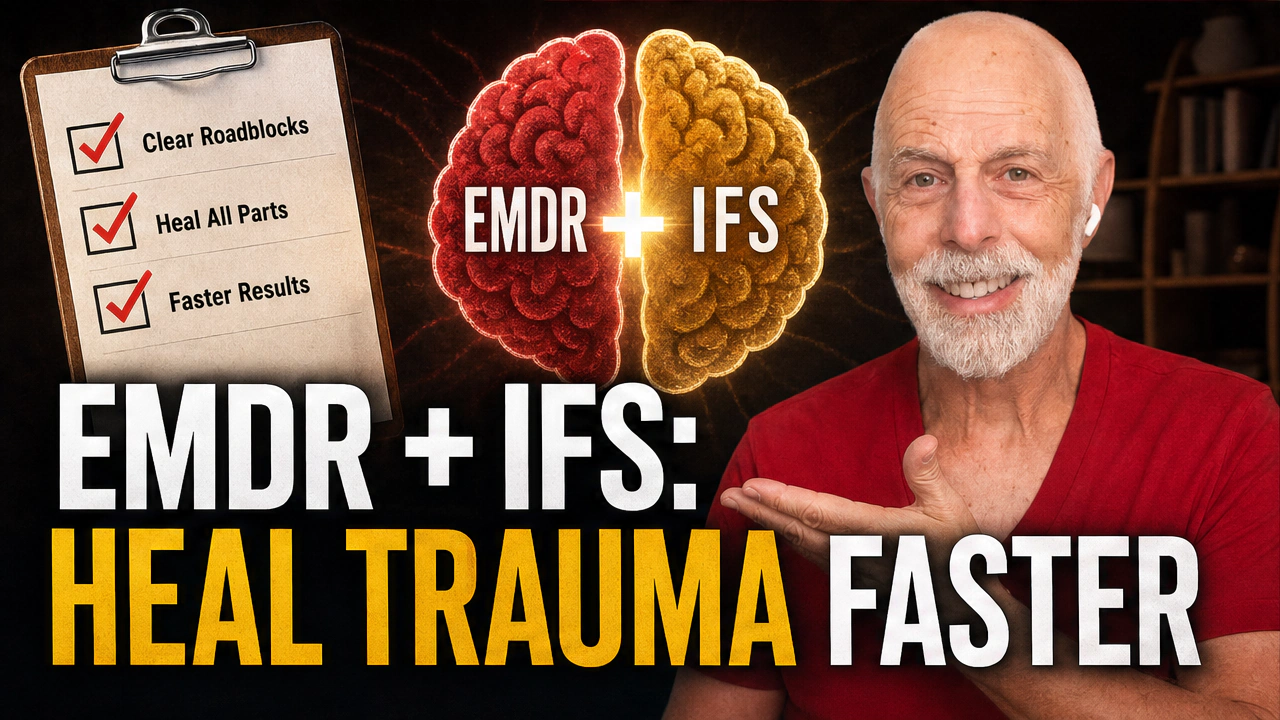

EMDR + IFS Heal Trauma Faster

IFS and EMDR: Why Combining Them Heals Trauma Faster

Picture of Todd Creager

Todd Creager

Todd Creager, LCSW, LMFT, is a marriage, relationship and sex therapist who helps couples heal from infidelity, betrayal and years of disconnection, so they can build a long, hot marriage instead of ending one.

35+ years in practice. Certified EMDR therapist. Adjunct lecturer, USC School of Social Work. Bestselling author of The Long, Hot Marriage and Love, Sex and Karaoke. Married, happily, for a long time.

Learn more about Todd: https://toddcreager.com/about/

Ready to talk? See how Todd works with couples and individuals or reach out for a 20-minute phone consult.

Key Takeaways

Combining IFS and EMDR for Faster Trauma Healing

  • IFS (Internal Family Systems) helps you understand the protective parts of you that guard your deepest wounds, while EMDR reprocesses the traumatic memories those wounds are built on.
  • EMDR alone sometimes stalls because protective parts aren’t ready to let you go to the deeper wound. You might go blank or dissociate mid-session, and that’s the system saying “not yet.”
  • When IFS creates safety first and EMDR does the reprocessing second, parts that have carried the same wound for decades can finally put it down.

I’ve been working with EMDR longer than almost any other approach in my practice, and it works fabulously. Except when it doesn’t. Sometimes a client sits down, we go toward the traumatic memory, and everything stalls. They go blank. They drift away. Nothing moves.

For years, therapists treated that as resistance. It isn’t. It’s protection.

That distinction is the reason I now combine EMDR with Internal Family Systems, and it’s the reason my clients heal faster than they did with either approach alone. If you’ve tried trauma therapy and felt stuck, or you’re a betrayed partner who can’t move past the discovery no matter how hard you try, this is for you.

Let me walk you through how the two approaches work together.

What IFS and EMDR Each Do for Trauma

IFS gives us clear language for something we all sense about ourselves: we’re made up of different parts. There are wounded parts, the ones that made us feel unsafe, inadequate, unlovable, or abandoned as children. We call these exiles, because they’ve been exiled to a corner of our psyche. And there are protective parts whose whole job is to make sure we never feel that pain again.

Here’s a quick example. Someone who was abandoned as a child may keep picking partners who are emotionally safe but not very stimulating. There’s a protective part saying, “I’m not going to let you experience that abandonment again, so I’ll pick somebody who may not excite you but won’t leave you.” The protector means well. It’s also running the show.

IFS also teaches that we all have a self, the best version of us, with the capacity to be calm, connected, courageous, curious, and compassionate. Healing happens when that self builds a relationship with the parts.

EMDR, which stands for eye movement desensitization and reprocessing, does something different. When we’re stuck in a memory, EMDR helps the brain reprocess it so it can get filed where it belongs. The charge comes down. The past stays in the past, and the memory stops hijacking your system every time your partner raises their voice or doesn’t come through.

One approach builds the relationship. The other releases the burden. And that’s exactly why they belong together.

Why EMDR Stalls Without Parts Work

When EMDR stops working mid-process, it’s almost always because a protective part isn’t ready for you to go to the deeper wound. The system doesn’t feel safe enough to go there yet, so the protector shuts it down. You go blank. You dissociate. The memory won’t budge.

I see this constantly with betrayed partners. Maybe the person who did the betraying is genuinely working on themselves, things are getting better at home, and yet the betrayed partner can’t move past the initial discovery of the infidelity. If we go straight to reprocessing that memory, it usually won’t work. So instead we get curious. What’s the protective part here, and what is it afraid would happen if it stepped aside?

Often it’s a part that says, “If I let go of this, I’m treating myself like it doesn’t matter.” Or, “If I move past it, I’m letting my partner off the hook, and that’s not okay.” Those aren’t irrational thoughts. They’re a protector doing its job with the only tools it has.

What most people miss, including plenty of clinicians, is that blocking is information, and it deserves respect rather than a workaround. When we befriend that protective part, understand what it’s protecting and why, and help it unburden its overprotective role, it gives us permission. Only then does the deeper work open up. Without that relationship between self and protector, nothing moves. I mean that literally in the clinical sense: the relationship matters more than the technique.

The Sequence That Lets Old Wounds Finally Release

Here’s the part I find most satisfying to watch. Even after beautiful parts work, sometimes the wound still doesn’t let go. You’ve met the exile. You’re sitting with it. You feel compassion for what it’s carrying. And your nervous system still fires the same alarm the next time something echoes the original hurt.

That’s not a failure of the parts work. That’s where EMDR comes in.

The exile is the part that experienced the trauma, and it’s still holding the memory with all its original charge. EMDR goes to that specific memory and helps the brain reprocess it. IFS created the safety and got the protectors to step aside in a creative, compassionate way. EMDR then does the reprocessing that releases what the exile has been holding, sometimes for decades.

The sequence matters. Safety first, release second. Run it in the other order and the protectors will block you. Skip the parts work entirely and you may spend session after session going nowhere, wondering if you’re somehow bad at therapy. You’re not. Your system was protecting you, and it needed to be heard before it would let you heal.

When both pieces are in place, I’ve watched people put down wounds they’d carried their whole adult lives. Abandonment from childhood. The trauma of betrayal. Old alarms that finally go quiet. It’s very healing for them, and honestly, it’s one of the great joys of this work for me.

What To Do Next

If you’re stuck in trauma recovery, here’s where to start:

  • Notice where you block. If you go blank, change the subject, or feel foggy when a memory comes up, that’s a protective part. Name it as protection, not failure.
  • Get curious instead of frustrated. Ask that part what it’s afraid would happen if it let you feel the wound. Curiosity is one of those C words for a reason.
  • Ask potential therapists about their approach. If you’re considering EMDR, ask whether they also work with parts. The combination is what makes stubborn trauma move.
  • Don’t force the memory work. If EMDR has stalled for you before, the answer is usually more safety, not more pushing.

Your first step today is simple: the next time an old wound flares, pause and ask, “What part of me is showing up right now, and what is it protecting?” That one question begins the relationship everything else is built on.

And if you’re ready for support, this combination of IFS and EMDR is exactly how I work with individuals and couples healing from trauma and betrayal.

You don’t have to stay stuck carrying a wound that belongs to the past. The alarm that fires in your nervous system today was installed a long time ago, and with the right sequence, the right relationship with your parts, and the right reprocessing, it can finally be turned off. Reach out and schedule a session with me if you’re ready to do that work.

This is Todd Creager, making the world safe for love.

EMDR + IFS Heal Trauma Faster

IFS and EMDR: Why Combining Them Heals Trauma Faster

Key Takeaways

Combining IFS and EMDR for Faster Trauma Healing

  • IFS (Internal Family Systems) helps you understand the protective parts of you that guard your deepest wounds, while EMDR reprocesses the traumatic memories those wounds are built on.
  • EMDR alone sometimes stalls because protective parts aren’t ready to let you go to the deeper wound. You might go blank or dissociate mid-session, and that’s the system saying “not yet.”
  • When IFS creates safety first and EMDR does the reprocessing second, parts that have carried the same wound for decades can finally put it down.

I’ve been working with EMDR longer than almost any other approach in my practice, and it works fabulously. Except when it doesn’t. Sometimes a client sits down, we go toward the traumatic memory, and everything stalls. They go blank. They drift away. Nothing moves.

For years, therapists treated that as resistance. It isn’t. It’s protection.

That distinction is the reason I now combine EMDR with Internal Family Systems, and it’s the reason my clients heal faster than they did with either approach alone. If you’ve tried trauma therapy and felt stuck, or you’re a betrayed partner who can’t move past the discovery no matter how hard you try, this is for you.

Let me walk you through how the two approaches work together.

What IFS and EMDR Each Do for Trauma

IFS gives us clear language for something we all sense about ourselves: we’re made up of different parts. There are wounded parts, the ones that made us feel unsafe, inadequate, unlovable, or abandoned as children. We call these exiles, because they’ve been exiled to a corner of our psyche. And there are protective parts whose whole job is to make sure we never feel that pain again.

Here’s a quick example. Someone who was abandoned as a child may keep picking partners who are emotionally safe but not very stimulating. There’s a protective part saying, “I’m not going to let you experience that abandonment again, so I’ll pick somebody who may not excite you but won’t leave you.” The protector means well. It’s also running the show.

IFS also teaches that we all have a self, the best version of us, with the capacity to be calm, connected, courageous, curious, and compassionate. Healing happens when that self builds a relationship with the parts.

EMDR, which stands for eye movement desensitization and reprocessing, does something different. When we’re stuck in a memory, EMDR helps the brain reprocess it so it can get filed where it belongs. The charge comes down. The past stays in the past, and the memory stops hijacking your system every time your partner raises their voice or doesn’t come through.

One approach builds the relationship. The other releases the burden. And that’s exactly why they belong together.

Why EMDR Stalls Without Parts Work

When EMDR stops working mid-process, it’s almost always because a protective part isn’t ready for you to go to the deeper wound. The system doesn’t feel safe enough to go there yet, so the protector shuts it down. You go blank. You dissociate. The memory won’t budge.

I see this constantly with betrayed partners. Maybe the person who did the betraying is genuinely working on themselves, things are getting better at home, and yet the betrayed partner can’t move past the initial discovery of the infidelity. If we go straight to reprocessing that memory, it usually won’t work. So instead we get curious. What’s the protective part here, and what is it afraid would happen if it stepped aside?

Often it’s a part that says, “If I let go of this, I’m treating myself like it doesn’t matter.” Or, “If I move past it, I’m letting my partner off the hook, and that’s not okay.” Those aren’t irrational thoughts. They’re a protector doing its job with the only tools it has.

What most people miss, including plenty of clinicians, is that blocking is information, and it deserves respect rather than a workaround. When we befriend that protective part, understand what it’s protecting and why, and help it unburden its overprotective role, it gives us permission. Only then does the deeper work open up. Without that relationship between self and protector, nothing moves. I mean that literally in the clinical sense: the relationship matters more than the technique.

The Sequence That Lets Old Wounds Finally Release

Here’s the part I find most satisfying to watch. Even after beautiful parts work, sometimes the wound still doesn’t let go. You’ve met the exile. You’re sitting with it. You feel compassion for what it’s carrying. And your nervous system still fires the same alarm the next time something echoes the original hurt.

That’s not a failure of the parts work. That’s where EMDR comes in.

The exile is the part that experienced the trauma, and it’s still holding the memory with all its original charge. EMDR goes to that specific memory and helps the brain reprocess it. IFS created the safety and got the protectors to step aside in a creative, compassionate way. EMDR then does the reprocessing that releases what the exile has been holding, sometimes for decades.

The sequence matters. Safety first, release second. Run it in the other order and the protectors will block you. Skip the parts work entirely and you may spend session after session going nowhere, wondering if you’re somehow bad at therapy. You’re not. Your system was protecting you, and it needed to be heard before it would let you heal.

When both pieces are in place, I’ve watched people put down wounds they’d carried their whole adult lives. Abandonment from childhood. The trauma of betrayal. Old alarms that finally go quiet. It’s very healing for them, and honestly, it’s one of the great joys of this work for me.

What To Do Next

If you’re stuck in trauma recovery, here’s where to start:

  • Notice where you block. If you go blank, change the subject, or feel foggy when a memory comes up, that’s a protective part. Name it as protection, not failure.
  • Get curious instead of frustrated. Ask that part what it’s afraid would happen if it let you feel the wound. Curiosity is one of those C words for a reason.
  • Ask potential therapists about their approach. If you’re considering EMDR, ask whether they also work with parts. The combination is what makes stubborn trauma move.
  • Don’t force the memory work. If EMDR has stalled for you before, the answer is usually more safety, not more pushing.

Your first step today is simple: the next time an old wound flares, pause and ask, “What part of me is showing up right now, and what is it protecting?” That one question begins the relationship everything else is built on.

And if you’re ready for support, this combination of IFS and EMDR is exactly how I work with individuals and couples healing from trauma and betrayal.

You don’t have to stay stuck carrying a wound that belongs to the past. The alarm that fires in your nervous system today was installed a long time ago, and with the right sequence, the right relationship with your parts, and the right reprocessing, it can finally be turned off. Reach out and schedule a session with me if you’re ready to do that work.

This is Todd Creager, making the world safe for love.

Reader Interactions

Leave a Reply

Your email address will not be published. Required fields are marked *