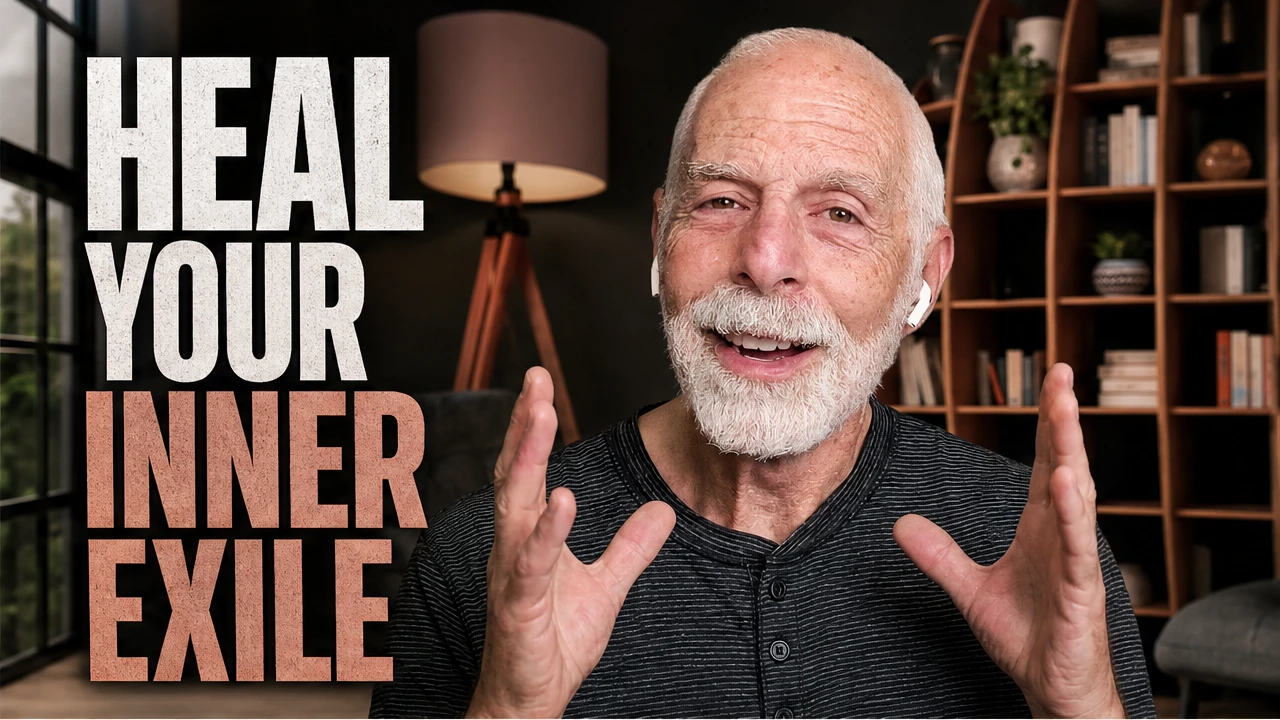

Why You Keep Running from Your Wounded Self (IFS Explained)

Why You Keep Running from Your Wounded Self (IFS Explained)

Key Takeaways

IFS Exile Explained: The Wounded Part You Keep Running From

  • In Internal Family Systems (IFS), the exile is the wounded part of you — often formed in childhood — that carries deep feelings of shame, loneliness, fear of abandonment, and “not enoughness” that your system learned to lock away.
  • Your protectors (the parts that pick fights, go numb, achieve relentlessly, or act out) exist for one reason: to keep you from ever feeling what the exile feels — and every adult relationship struggle you have traces back to those protectors still doing their job.
  • The IFS exile explained simply: it’s not a part you need to get rid of — it’s a part that has been waiting to be seen, and when your calm, compassionate self finally turns toward it, those protectors can rest and your relationships get to meet the real you.
  • Healing doesn’t come from running harder or managing better — it comes from the moment you stop, turn toward that younger wounded part, and let it know: I see you. You’re not alone anymore.

You’ve got a part of you that got hurt a long time ago. And everything — the way you withdraw, the way you fight, the way you work yourself to exhaustion — has been one long, elaborate attempt to make sure you never have to feel it again.

That’s not weakness. That’s actually your system doing exactly what it was designed to do.

In Internal Family Systems therapy, we call that hurt, hidden part the exile. And the reason so many people stay stuck — in their own heads and in their relationships — is that they’ve spent decades running from something that isn’t going to destroy them. It’s been waiting for them.

Here’s what the IFS exile actually is, why your system works so hard to keep you away from it, and what happens when you finally stop running.


What the IFS Exile Is — and Why You Have One

The exile is a part of you, usually formed early in life, that got hurt and was never fully allowed to heal. It carries the feelings your younger self couldn’t process alone — the shame of being told you were bad, the ache of not being enough, the terror of being left.

Those feelings were too much for a child to hold. So your internal system did something remarkably protective: it locked that part away. Exiled it. And then it built walls around it so you’d never have to feel those things again.

This is where the name comes from. You didn’t consciously choose to exile that part — your system chose it for you, out of something close to love. The most accurate way to understand it isn’t that you’re broken or damaged. It’s that your internal world is organized — organized entirely around protecting you from a pain it decided was unbearable.

What most people miss about the IFS exile is this: that wounded part never stopped existing. It didn’t fade. It didn’t grow up. It’s still in there, at whatever age the wound happened, still carrying exactly what it was carrying then. And here’s the part that changes everything — it wants to be seen. It has always wanted to be seen.


How Your Protectors Keep You Away From the Exile

Underneath every difficult pattern in your relationship, there’s a protector doing its job.

The partner who pulls away when things get close? Protector. The one who starts fights right when intimacy builds? Protector. The high-achiever who is never satisfied, never still, always onto the next thing? That’s a protector too — what IFS calls a manager. Managers keep the exile contained through control, achievement, and constant forward motion. They keep you focused on your partner’s flaws instead of your own ache.

Then there are the firefighters — the impulsive parts that go off the moment the exile starts to surface. A drink. A fight. A scroll through the phone for an hour. An affair. A shutdown so complete you can’t feel anything at all. Firefighters don’t plan. They react. And they’re fast. Any spark of that old feeling, and they’re already moving to put it out.

Neither managers nor firefighters are your enemy. They genuinely believe that if you let yourself touch that old pain, it will swallow you whole. They’ve spent your entire life operating from that belief. The problem is that as long as they’re running the show, you’re not really in your relationships — your protectors are. Your partner isn’t getting you. They’re getting the wall.

And this is the most accurate lens for looking at what goes wrong between people: not that one person is difficult and one person is easy, but that two sets of protectors keep meeting each other and calling it love.


What Actually Happens When You Meet the Exile

The exile isn’t going to swallow you. That’s the fear — but it’s not the truth.

What actually happens when you stop running and turn toward that wounded part — with the calm, compassionate, grown-up part of yourself, what IFS calls the Self — is something quieter and more profound than most people expect. You sit with that younger part. You let it know: I see you. I hear you. You’re not alone anymore.

That’s it. That’s the whole move.

When the exile finally feels seen by the Self — not fixed, not managed, not reasoned with, just witnessed — the protectors don’t need to work overtime anymore. The manager doesn’t have to keep achieving to prove you’re enough. The firefighter doesn’t have to blow everything up to keep you safe. They can rest. And when they rest, something opens up in your relationship that wasn’t available before.

Your partner gets to meet the real you. Not the one who’s been managing. Not the one who goes numb or picks fights. The actual you — the curious, calm, connected person who has been in there the whole time, underneath all the protection.

This is what changes in a marriage or long-term relationship when both partners do this work. Not that conflict disappears, but that what’s underneath the conflict becomes visible — and workable. Two people who can access their Self, even briefly, can have a completely different conversation than two people whose protectors are running the room.


How to Start Moving Toward Your Exile

You don’t need to go from avoidance to full exposure in one sitting. This is slow, careful work — and the pace matters.

  • Notice your protectors first. Before you can meet the exile, you need to recognize what’s been keeping you away. When you withdraw, pick a fight, numb out, or go into overdrive — that’s a protector. Get curious about it rather than judging it.
  • Thank the protector before asking it to step back. This sounds unusual, but it works. These parts genuinely tried to help you. Acknowledging that shifts the internal dynamic.
  • Access your Self. The calm, compassionate, courageous part of you — the “C words” in IFS: curious, clear, calm, connected, courageous, compassionate, confident, creative. You already have this. It doesn’t need to be built. It needs to be accessed.
  • Turn toward the exile gently. Ask it what it wants you to know. Let it show you what it’s been carrying. Stay with it — don’t try to fix it or rush past the feeling.
  • Let it know it’s not alone. That simple act of witnessing is what begins to change the internal landscape — and by extension, your relationship.

Working with a therapist trained in IFS makes this process significantly safer and more effective, particularly when the wounds are deep or when trauma is part of the picture.


Most people go through their entire lives being run by their protectors and never knowing it. They make decisions from those parts, they choose partners from those parts, they parent from those parts — and then they wonder why nothing changes no matter how hard they try.

The exile isn’t the problem. It’s the answer.

When you finally meet that part of yourself that got hurt a long time ago, you stop being an automaton driven by protection. You start being a person. And the people closest to you — they feel that difference immediately.

If this resonates with you, I’d love to hear from you. Visit toddcreager.com to explore more resources and reach out directly. This is Todd Creager — making the world safe for love.

What if your next argument could bring you closer instead of driving you apart?


Learn how in Todd Creager’s Loving & Connecting Masterclass.
Lifetime access. Real results.

Frequently Asked Questions

Q: What is the IFS exile in simple terms?

A: In Internal Family Systems therapy, the exile is the wounded part of you — usually formed during childhood — that carries painful feelings like shame, loneliness, or the sense of not being enough. Your system learned to lock this part away so you wouldn’t have to feel those emotions, and then built protective parts around it to keep it hidden.

Q: How is the IFS exile different from the inner child?

A: They overlap significantly. The exile in IFS is a specific part that holds unprocessed emotional wounds from earlier in life — similar to what many people call the inner child. The distinction is that IFS gives you a structured way to work with that part through the Self, rather than just acknowledging it exists.

Q: Why is the exile so hard to access in therapy?

A: Because your protectors — both managers and firefighters — have spent years making sure you don’t feel what the exile feels. They genuinely believe that touching that pain would be overwhelming. Until those protectors feel safe enough to step back, direct access to the exile stays blocked. That’s why IFS works with protectors first, not around them.

Q: Can meeting your exile actually improve your relationship?

A: Yes — and it’s one of the most direct paths to real change in a partnership. When your protective parts aren’t running the show, your partner gets to interact with your actual Self rather than your defenses. When both partners do this work, the quality of connection changes in ways that conflict-management techniques alone can’t produce.

Q: Do I need a therapist to work with my IFS exile?

A: For surface-level awareness and self-reflection, you can begin exploring this on your own. For deeper wounds — especially where trauma, shame, or abandonment are involved — working with a therapist trained in IFS is strongly recommended. The exile holds real pain, and having a skilled guide makes the process both safer and more effective.


Ready to stop running and start healing?

Visit toddcreager.com to learn more about working with Todd directly, explore his video library, and take the first step toward a relationship that gets to meet the real you.

Popular Post

Contact Us

Why You Keep Running from Your Wounded Self (IFS Explained)

Why You Keep Running from Your Wounded Self (IFS Explained)

Key Takeaways

IFS Exile Explained: The Wounded Part You Keep Running From

  • In Internal Family Systems (IFS), the exile is the wounded part of you — often formed in childhood — that carries deep feelings of shame, loneliness, fear of abandonment, and “not enoughness” that your system learned to lock away.
  • Your protectors (the parts that pick fights, go numb, achieve relentlessly, or act out) exist for one reason: to keep you from ever feeling what the exile feels — and every adult relationship struggle you have traces back to those protectors still doing their job.
  • The IFS exile explained simply: it’s not a part you need to get rid of — it’s a part that has been waiting to be seen, and when your calm, compassionate self finally turns toward it, those protectors can rest and your relationships get to meet the real you.
  • Healing doesn’t come from running harder or managing better — it comes from the moment you stop, turn toward that younger wounded part, and let it know: I see you. You’re not alone anymore.

You’ve got a part of you that got hurt a long time ago. And everything — the way you withdraw, the way you fight, the way you work yourself to exhaustion — has been one long, elaborate attempt to make sure you never have to feel it again.

That’s not weakness. That’s actually your system doing exactly what it was designed to do.

In Internal Family Systems therapy, we call that hurt, hidden part the exile. And the reason so many people stay stuck — in their own heads and in their relationships — is that they’ve spent decades running from something that isn’t going to destroy them. It’s been waiting for them.

Here’s what the IFS exile actually is, why your system works so hard to keep you away from it, and what happens when you finally stop running.


What the IFS Exile Is — and Why You Have One

The exile is a part of you, usually formed early in life, that got hurt and was never fully allowed to heal. It carries the feelings your younger self couldn’t process alone — the shame of being told you were bad, the ache of not being enough, the terror of being left.

Those feelings were too much for a child to hold. So your internal system did something remarkably protective: it locked that part away. Exiled it. And then it built walls around it so you’d never have to feel those things again.

This is where the name comes from. You didn’t consciously choose to exile that part — your system chose it for you, out of something close to love. The most accurate way to understand it isn’t that you’re broken or damaged. It’s that your internal world is organized — organized entirely around protecting you from a pain it decided was unbearable.

What most people miss about the IFS exile is this: that wounded part never stopped existing. It didn’t fade. It didn’t grow up. It’s still in there, at whatever age the wound happened, still carrying exactly what it was carrying then. And here’s the part that changes everything — it wants to be seen. It has always wanted to be seen.


How Your Protectors Keep You Away From the Exile

Underneath every difficult pattern in your relationship, there’s a protector doing its job.

The partner who pulls away when things get close? Protector. The one who starts fights right when intimacy builds? Protector. The high-achiever who is never satisfied, never still, always onto the next thing? That’s a protector too — what IFS calls a manager. Managers keep the exile contained through control, achievement, and constant forward motion. They keep you focused on your partner’s flaws instead of your own ache.

Then there are the firefighters — the impulsive parts that go off the moment the exile starts to surface. A drink. A fight. A scroll through the phone for an hour. An affair. A shutdown so complete you can’t feel anything at all. Firefighters don’t plan. They react. And they’re fast. Any spark of that old feeling, and they’re already moving to put it out.

Neither managers nor firefighters are your enemy. They genuinely believe that if you let yourself touch that old pain, it will swallow you whole. They’ve spent your entire life operating from that belief. The problem is that as long as they’re running the show, you’re not really in your relationships — your protectors are. Your partner isn’t getting you. They’re getting the wall.

And this is the most accurate lens for looking at what goes wrong between people: not that one person is difficult and one person is easy, but that two sets of protectors keep meeting each other and calling it love.


What Actually Happens When You Meet the Exile

The exile isn’t going to swallow you. That’s the fear — but it’s not the truth.

What actually happens when you stop running and turn toward that wounded part — with the calm, compassionate, grown-up part of yourself, what IFS calls the Self — is something quieter and more profound than most people expect. You sit with that younger part. You let it know: I see you. I hear you. You’re not alone anymore.

That’s it. That’s the whole move.

When the exile finally feels seen by the Self — not fixed, not managed, not reasoned with, just witnessed — the protectors don’t need to work overtime anymore. The manager doesn’t have to keep achieving to prove you’re enough. The firefighter doesn’t have to blow everything up to keep you safe. They can rest. And when they rest, something opens up in your relationship that wasn’t available before.

Your partner gets to meet the real you. Not the one who’s been managing. Not the one who goes numb or picks fights. The actual you — the curious, calm, connected person who has been in there the whole time, underneath all the protection.

This is what changes in a marriage or long-term relationship when both partners do this work. Not that conflict disappears, but that what’s underneath the conflict becomes visible — and workable. Two people who can access their Self, even briefly, can have a completely different conversation than two people whose protectors are running the room.


How to Start Moving Toward Your Exile

You don’t need to go from avoidance to full exposure in one sitting. This is slow, careful work — and the pace matters.

  • Notice your protectors first. Before you can meet the exile, you need to recognize what’s been keeping you away. When you withdraw, pick a fight, numb out, or go into overdrive — that’s a protector. Get curious about it rather than judging it.
  • Thank the protector before asking it to step back. This sounds unusual, but it works. These parts genuinely tried to help you. Acknowledging that shifts the internal dynamic.
  • Access your Self. The calm, compassionate, courageous part of you — the “C words” in IFS: curious, clear, calm, connected, courageous, compassionate, confident, creative. You already have this. It doesn’t need to be built. It needs to be accessed.
  • Turn toward the exile gently. Ask it what it wants you to know. Let it show you what it’s been carrying. Stay with it — don’t try to fix it or rush past the feeling.
  • Let it know it’s not alone. That simple act of witnessing is what begins to change the internal landscape — and by extension, your relationship.

Working with a therapist trained in IFS makes this process significantly safer and more effective, particularly when the wounds are deep or when trauma is part of the picture.


Most people go through their entire lives being run by their protectors and never knowing it. They make decisions from those parts, they choose partners from those parts, they parent from those parts — and then they wonder why nothing changes no matter how hard they try.

The exile isn’t the problem. It’s the answer.

When you finally meet that part of yourself that got hurt a long time ago, you stop being an automaton driven by protection. You start being a person. And the people closest to you — they feel that difference immediately.

If this resonates with you, I’d love to hear from you. Visit toddcreager.com to explore more resources and reach out directly. This is Todd Creager — making the world safe for love.

What if your next argument could bring you closer instead of driving you apart?


Learn how in Todd Creager’s Loving & Connecting Masterclass.
Lifetime access. Real results.

Frequently Asked Questions

Q: What is the IFS exile in simple terms?

A: In Internal Family Systems therapy, the exile is the wounded part of you — usually formed during childhood — that carries painful feelings like shame, loneliness, or the sense of not being enough. Your system learned to lock this part away so you wouldn’t have to feel those emotions, and then built protective parts around it to keep it hidden.

Q: How is the IFS exile different from the inner child?

A: They overlap significantly. The exile in IFS is a specific part that holds unprocessed emotional wounds from earlier in life — similar to what many people call the inner child. The distinction is that IFS gives you a structured way to work with that part through the Self, rather than just acknowledging it exists.

Q: Why is the exile so hard to access in therapy?

A: Because your protectors — both managers and firefighters — have spent years making sure you don’t feel what the exile feels. They genuinely believe that touching that pain would be overwhelming. Until those protectors feel safe enough to step back, direct access to the exile stays blocked. That’s why IFS works with protectors first, not around them.

Q: Can meeting your exile actually improve your relationship?

A: Yes — and it’s one of the most direct paths to real change in a partnership. When your protective parts aren’t running the show, your partner gets to interact with your actual Self rather than your defenses. When both partners do this work, the quality of connection changes in ways that conflict-management techniques alone can’t produce.

Q: Do I need a therapist to work with my IFS exile?

A: For surface-level awareness and self-reflection, you can begin exploring this on your own. For deeper wounds — especially where trauma, shame, or abandonment are involved — working with a therapist trained in IFS is strongly recommended. The exile holds real pain, and having a skilled guide makes the process both safer and more effective.


Ready to stop running and start healing?

Visit toddcreager.com to learn more about working with Todd directly, explore his video library, and take the first step toward a relationship that gets to meet the real you.

Reader Interactions

Leave a Reply

Your email address will not be published. Required fields are marked *