
Key Takeaways
- The same drive that makes a man excel at work can make him go blank the moment his partner needs him emotionally. The culprit is often what’s called a “manager part,” not a lack of love.
- A manager part is a protective system installed early, usually in a childhood where showing feelings wasn’t safe, or where being competent was the only way to earn approval.
- Underneath the manager is a wounded, younger part — an exile — that believes love is conditional on performing well, and the shutdown is that part trying to stay hidden.
- Change starts by getting to know the manager and the part it’s protecting, not by trying to force presence through willpower alone.
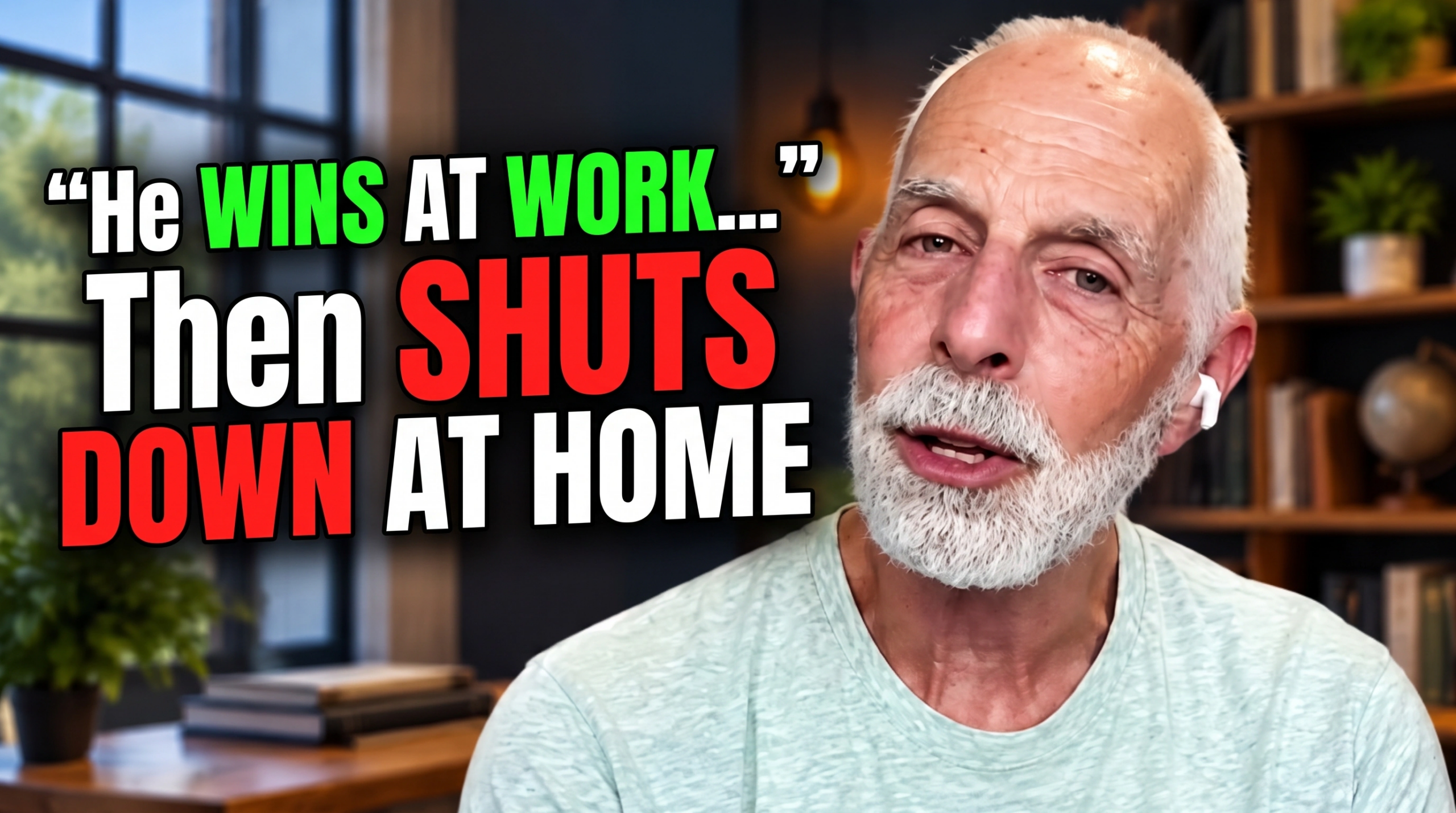
If you’ve ever wondered why your husband shuts down emotionally, I see this pattern constantly in my practice. A man can run a meeting, manage a crisis, and lead a team through a deadline, then walk through his own front door and have nothing left over — not for what his partner actually needs.
She asks, “Can we talk about something?” and the same man who just handled a six-figure negotiation goes blank. He shuts down, or leaves the room emotionally even while his body stays in it. That is not a character flaw. It’s a manager part, a protective system that has been running the show for a long time, and once you understand what it’s protecting, the shutdown starts to make a lot more sense.
What a Manager Part Is — and Why It Runs the Show at Home
A manager part is the internal system that keeps a person organized, controlled, and productive — the same part that runs a meeting well, manages a crisis calmly, and knows how to suppress whatever it’s feeling so the job gets done. At work, that system pays off. It gets you promoted. It gets the deal closed.
The trouble starts when that same manager tries to run your home life, because a manager part doesn’t know how to do presence. It only knows how to perform. This is one of the most common patterns I see in my practice, and it rarely has anything to do with how much the man actually cares.
I’ve worked with a lot of men who can walk out of a six-figure negotiation and then go completely blank the moment their partner says, “Can we talk about something?” It looks like indifference from the outside. It isn’t. The manager that just closed the deal is now trying to solve an emotional moment the only way it knows how — by controlling it, fixing it, or shutting it down — and none of those moves are what the partner is actually asking for.
Here’s the part most people miss: this isn’t a willpower problem. Telling a man with a strong manager part to “just be more present” is like telling someone to turn off a smoke detector because it’s inconvenient right now. The detector isn’t malfunctioning. It’s doing exactly the job it was built to do.
Where This Manager Part Gets Installed
This manager part almost never starts in adulthood. It gets installed early, usually in a home where emotions weren’t safe to show, or where being competent was the only way a kid could earn approval. Sometimes it’s simpler and harder than that — a parent who should have been holding the family together wasn’t able to, and a child stepped into that gap because someone had to.
Whatever the specific version, the manager learns one core lesson early, and learns it well: feelings are a liability. Showing them didn’t get met with comfort. It got met with more chaos, more disappointment, or simply nothing at all. So the manager adapts. It gets organized. It gets competent. It learns to keep the lid on.
I just finished a session with a couple where both partners learned exactly that lesson — feelings are a liability — though from different homes and in different ways. She’s done more of her own therapeutic work and has an easier time being vulnerable now. He’s still mostly run by the manager that formed to protect him, which is where a lot of our work together is happening right now.
That’s the part worth sitting with. This system paid off. It kept a child safe, or functional, or approved of, in a home that didn’t make room for anything softer. The manager isn’t the problem. It’s doing exactly what it was built to do — it just was never given a different job once the danger passed.
Why Being Competent at Home Doesn’t Work
At work, competence is the whole game, and the manager is built for exactly that. At home, your partner generally isn’t asking for your competence. She’s asking for your presence — your attention, your capacity to actually tune in, and your capacity to let her tune into you too.
That’s a different skill entirely, and it’s one the manager was never built to have. Presence requires the very thing the manager exists to prevent: vulnerability. It means being seen without a plan, without a solution ready, without controlling how the moment turns out. A manager part doesn’t know what to do with that kind of exposure, so it shuts down.
This is why “just be more present” rarely works as advice on its own. You’re asking a part of the psyche to do the opposite of its job. It would be like asking a security guard to also be the one who lets his guard down. Those two roles don’t live in the same place, and one of them has been in charge for a very long time.
The gap isn’t a lack of effort. Most of the men I work with are trying hard, often exhaustingly hard, to get this right. The gap is that trying harder in the same mode — performing better, managing the conversation more skillfully — only strengthens the very system that’s blocking the presence their partner is actually asking for.
The Wounded Part Underneath: Meeting the Exile
Underneath every manager part is the part it’s protecting. In this framework, that’s called an exile — a younger, wounded part that got pushed out of awareness a long time ago, not on purpose, but because it was carrying something too painful to feel while also trying to function.
For the man who shuts down at home, the exile is usually the part that learned love was conditional on getting it right. Somewhere along the way, being good enough, competent enough, or in control enough became the price of being loved, and the manager formed to make sure that price kept getting paid.
That’s why the shutdown isn’t really about the partner in front of him. A part of him still believes that the moment he stops performing, he’ll be exposed as not enough. The system isn’t protecting him from his partner. It’s protecting the exile from being seen and confirmed as unlovable, which is a much older fear than anything happening in the current conversation.
I want to be direct about something here. The man who succeeds at everything but can’t show up at home is not failing at his relationship. He’s running a program that was never built for intimacy in the first place, and until he meets the part running it, the shutdown keeps happening no matter how hard he tries to be different by sheer force of will.
When Your Husband Shuts Down Emotionally: There Is a Way Through
There’s real hope here, and I want to be plain about that too. I’m genuinely optimistic about this pattern, because I watch it shift regularly with people who came in convinced feelings were a liability, just like the couple I mentioned earlier.
The shift doesn’t happen by fighting the manager or trying to override it through effort. It happens when someone learns to show up for these protective parts and for the exiled, wounded parts underneath them — getting curious about what the manager is guarding against, and eventually letting the exile be met instead of kept hidden.
I’ve worked with thousands of men and women over the years who learned early that feelings were a liability, and the pattern is remarkably consistent. Once the manager stops having to carry the whole load by itself, presence stops being something a man has to force. It becomes something that’s simply available again.
None of this happens overnight, and I won’t pretend it does. But it is genuinely liberating for both people in the relationship — the one who’s been shut down and the one who’s been on the outside of it, wondering what happened to the person they fell in love with. The goal was never for him to become a different person. It’s for the part of him that already loves his partner to finally have room to show up.
What To Do Next
If this is your pattern, or your partner’s, here’s where to start.
Name the part out loud, together. The next time the shutdown happens, try saying, “I think my manager just took over,” instead of defending or explaining. Naming it takes some of the shame out of the moment.
Get curious about where it was installed. Ask what home this was learned in — was competence the only way to get approval, or did feelings simply not have room? You don’t need a full answer in one sitting.
Slow the moment down instead of solving it. When your partner asks to talk, the manager wants to fix, control, or leave. Practice staying in the room sixty seconds longer than feels comfortable.
Work with a therapist trained in parts work if the pattern doesn’t budge on its own. This kind of protective system rarely dissolves through awareness alone. It needs to be met directly, ideally with support.
The man who succeeds at everything except intimacy isn’t failing at his relationship. He’s running a program that was built for the office, not for closeness, and until he meets the part running it — and the wounded part it’s protecting — the shutdown will keep happening no matter how hard he tries to force presence. I’ve watched this shift happen for people who once believed feelings were a liability, and it is genuinely possible. If this sounds like your relationship, book a free consultation and let’s start there.
New to IFS? Start with my complete guide: Internal Family Systems: A Guide for Couples.

What if your next argument could bring you closer instead of driving you apart?
Learn how in Todd Creager’s Loving & Connecting Masterclass.
Lifetime access. Real results.

Frequently Asked Questions
Q: Why does my husband shut down when I want to talk about feelings?
A: In many cases, it isn’t withdrawal from you — it’s a protective part sometimes called a “manager” taking over, the same part that keeps him organized and controlled at work. That part doesn’t know how to do presence, only performance, so it tries to control, fix, or exit the moment instead of staying in it.
Q: Is emotional shutdown a sign my husband doesn’t love me?
A: No. A shutdown response usually means a protective system installed long before the relationship began has been triggered, not that love is missing. Underneath the shutdown is often a younger, wounded part that fears being exposed as “not enough” the moment it stops performing.
Q: What is a “manager part” in Internal Family Systems (IFS) terms?
A: A manager part is a protective part of the psyche that keeps a person organized, controlled, and productive, often by suppressing feelings that could get in the way of performing. It’s the part that makes someone excellent at work and, without other support, ill-equipped for emotional closeness at home.
Q: Can someone change this pattern, or is it permanent?
A: It can change, but not through willpower alone. The shift happens when the person gets to know the manager part and the wounded, exiled part underneath it — recognizing what each is protecting rather than fighting the shutdown directly.
Q: How does couples therapy help with this kind of emotional shutdown?
A: A therapist trained in parts work can help both partners recognize the manager part in real time, slow the moment down, and create enough safety for the protective part to loosen its grip so the person underneath can actually show up.




Reader Interactions