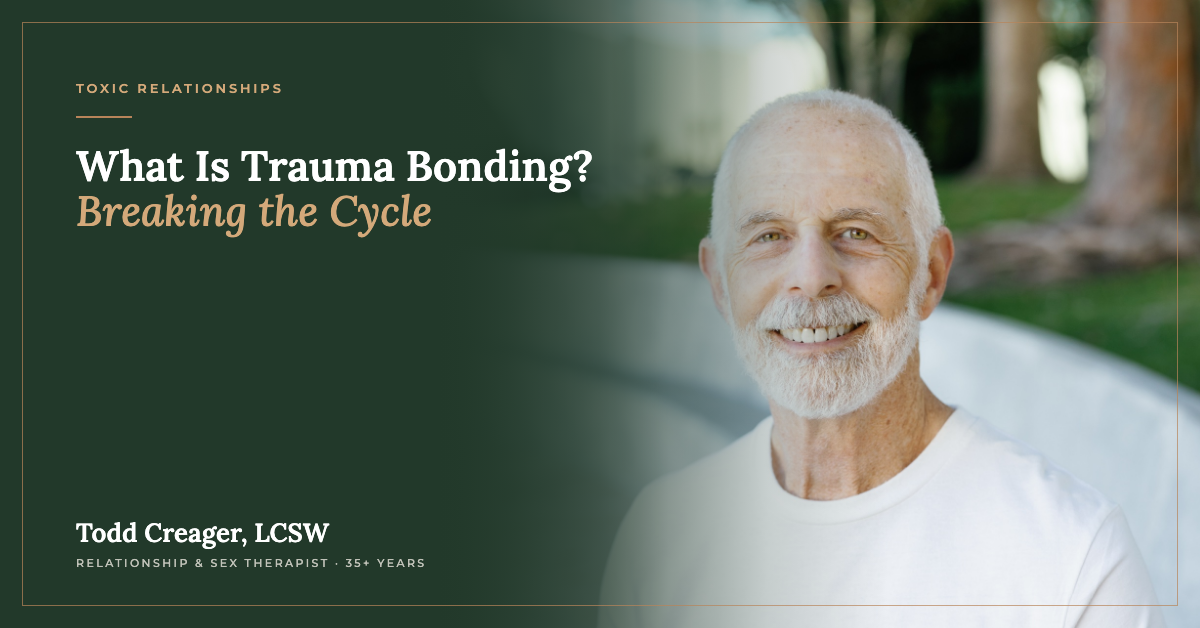

What Is Trauma Bonding? Breaking the Cycle

What Is Trauma Bonding? Breaking the Cycle

Picture of Todd Creager

Todd Creager

Todd Creager, LCSW, LMFT, is a marriage, relationship and sex therapist who helps couples heal from infidelity, betrayal and years of disconnection, so they can build a long, hot marriage instead of ending one.

35+ years in practice. Certified EMDR therapist. Adjunct lecturer, USC School of Social Work. Bestselling author of The Long, Hot Marriage and Love, Sex and Karaoke. Married, happily, for a long time.

Learn more about Todd: https://toddcreager.com/about/

Ready to talk? See how Todd works with couples and individuals or reach out for a 20-minute phone consult.

KEY TAKEAWAYS

If you can’t understand why it’s so hard to leave a relationship that hurts you, trauma bonding is often the answer:

  • A trauma bond forms through a cycle of harm followed by intermittent warmth or kindness — the inconsistency itself is what strengthens the attachment.
  • This isn’t a sign of weakness or poor judgment — it’s a predictable result of how the brain responds to intermittent reinforcement.
  • Trauma bonds explain why people often feel more attached after a painful cycle, not less, which confuses outsiders and the person experiencing it alike.
  • Breaking a trauma bond usually requires understanding the pattern itself, distance from the cycle, and often outside support.

“I know this is bad for me, so why can’t I leave?” is one of the most painful and common questions I hear from people in toxic relationships — and it’s rarely about weak willpower. I’m Todd Creager, and I want to explain trauma bonding, because understanding it tends to relieve a lot of unearned shame.

How a Trauma Bond Actually Forms

A trauma bond develops through a repeating cycle: harm, followed by a period of genuine-feeling kindness, warmth, or apology, followed eventually by harm again. It’s the inconsistency itself — not constant harm, and not constant kindness — that creates the powerful attachment.

This mirrors a well-documented psychological principle: intermittent reinforcement creates stronger attachment than consistent reinforcement does. A reward that comes unpredictably keeps you engaged and hopeful in a way a predictable reward never quite does — the same mechanism that makes slot machines compelling operates here.

What most people don’t expect: the warm periods often feel more intense and meaningful specifically because they follow pain — relief itself gets mistaken for deep connection, which is part of what makes the cycle so convincing from inside it.

Why This Isn’t a Sign of Weakness

People outside a trauma-bonded relationship often ask, with genuine confusion, why the person doesn’t just leave. From inside the bond, it’s rarely that simple — the attachment isn’t a choice being made poorly, it’s a predictable response to how the brain processes intermittent reward and relief.

This pattern can form in romantic relationships, but also in family relationships and even some friendships — anywhere a cycle of harm and intermittent warmth repeats consistently enough over time.

I want to be direct about this: understanding that you’re trauma bonded doesn’t mean you’re broken or making excuses. It means you’re recognizing a real psychological pattern, which is usually the first step toward actually changing it.

How to Actually Break the Cycle

Naming the pattern is the first step — recognizing that the warm periods are part of the same cycle as the harm, not a separate, hopeful sign that things are truly changing for good.

Distance, even temporary, helps interrupt the cycle’s pull — time away from the relationship reduces the intensity of the intermittent reinforcement and creates space to see the pattern more clearly than you can from inside it.

Outside support matters more here than in almost any other relationship pattern, because the bond itself works against your own instinct to leave. A therapist or support system that understands trauma bonding specifically can help you hold onto clarity even when the pull back into the cycle is strong.

What to Do Next

If you recognize this cycle, here’s where to start:

  • Name the pattern to yourself: the warm periods are part of the cycle, not evidence things have truly changed.
  • Create some distance, even temporary, to reduce the pull of the cycle and gain clearer perspective.
  • Talk to someone who understands trauma bonding specifically, not just general relationship advice.
  • Be patient with yourself — this pattern is a predictable psychological response, not a personal failing.

Your first step: name the cycle out loud to one person you trust, even if you’re not ready to act on it yet.

Understanding trauma bonding tends to relieve a significant amount of shame for people caught in it — this isn’t weakness, it’s a real pattern with a real path out. For the fuller picture on healing from toxic relationships, my complete guide walks through what comes next.
Feeling like you might be the victim of verbal abuse and/or gaslighting?

Frequently Asked Questions

Q: What is a trauma bond?

A: A trauma bond is a powerful attachment that forms through a repeating cycle of harm followed by intermittent warmth or kindness — the inconsistency itself, more than either extreme alone, is what creates the strong pull to stay.

Q: Why can’t I leave a relationship that hurts me?

A: This is often trauma bonding, not weak willpower. Intermittent reinforcement — unpredictable warmth following pain — creates stronger psychological attachment than consistent treatment does, in either direction.

Q: Is trauma bonding only in romantic relationships?

A: No. It can form in family relationships and some friendships too, wherever a cycle of harm and intermittent warmth repeats consistently over time.

Q: How do you break a trauma bond?

A: By naming the pattern, creating distance to interrupt the cycle’s pull, and getting outside support — ideally from someone who understands trauma bonding specifically, since the bond itself works against the instinct to leave.
What Is Trauma Bonding? Breaking the Cycle

What Is Trauma Bonding? Breaking the Cycle

KEY TAKEAWAYS

If you can’t understand why it’s so hard to leave a relationship that hurts you, trauma bonding is often the answer:

  • A trauma bond forms through a cycle of harm followed by intermittent warmth or kindness — the inconsistency itself is what strengthens the attachment.
  • This isn’t a sign of weakness or poor judgment — it’s a predictable result of how the brain responds to intermittent reinforcement.
  • Trauma bonds explain why people often feel more attached after a painful cycle, not less, which confuses outsiders and the person experiencing it alike.
  • Breaking a trauma bond usually requires understanding the pattern itself, distance from the cycle, and often outside support.

“I know this is bad for me, so why can’t I leave?” is one of the most painful and common questions I hear from people in toxic relationships — and it’s rarely about weak willpower. I’m Todd Creager, and I want to explain trauma bonding, because understanding it tends to relieve a lot of unearned shame.

How a Trauma Bond Actually Forms

A trauma bond develops through a repeating cycle: harm, followed by a period of genuine-feeling kindness, warmth, or apology, followed eventually by harm again. It’s the inconsistency itself — not constant harm, and not constant kindness — that creates the powerful attachment.

This mirrors a well-documented psychological principle: intermittent reinforcement creates stronger attachment than consistent reinforcement does. A reward that comes unpredictably keeps you engaged and hopeful in a way a predictable reward never quite does — the same mechanism that makes slot machines compelling operates here.

What most people don’t expect: the warm periods often feel more intense and meaningful specifically because they follow pain — relief itself gets mistaken for deep connection, which is part of what makes the cycle so convincing from inside it.

Why This Isn’t a Sign of Weakness

People outside a trauma-bonded relationship often ask, with genuine confusion, why the person doesn’t just leave. From inside the bond, it’s rarely that simple — the attachment isn’t a choice being made poorly, it’s a predictable response to how the brain processes intermittent reward and relief.

This pattern can form in romantic relationships, but also in family relationships and even some friendships — anywhere a cycle of harm and intermittent warmth repeats consistently enough over time.

I want to be direct about this: understanding that you’re trauma bonded doesn’t mean you’re broken or making excuses. It means you’re recognizing a real psychological pattern, which is usually the first step toward actually changing it.

How to Actually Break the Cycle

Naming the pattern is the first step — recognizing that the warm periods are part of the same cycle as the harm, not a separate, hopeful sign that things are truly changing for good.

Distance, even temporary, helps interrupt the cycle’s pull — time away from the relationship reduces the intensity of the intermittent reinforcement and creates space to see the pattern more clearly than you can from inside it.

Outside support matters more here than in almost any other relationship pattern, because the bond itself works against your own instinct to leave. A therapist or support system that understands trauma bonding specifically can help you hold onto clarity even when the pull back into the cycle is strong.

What to Do Next

If you recognize this cycle, here’s where to start:

  • Name the pattern to yourself: the warm periods are part of the cycle, not evidence things have truly changed.
  • Create some distance, even temporary, to reduce the pull of the cycle and gain clearer perspective.
  • Talk to someone who understands trauma bonding specifically, not just general relationship advice.
  • Be patient with yourself — this pattern is a predictable psychological response, not a personal failing.

Your first step: name the cycle out loud to one person you trust, even if you’re not ready to act on it yet.

Understanding trauma bonding tends to relieve a significant amount of shame for people caught in it — this isn’t weakness, it’s a real pattern with a real path out. For the fuller picture on healing from toxic relationships, my complete guide walks through what comes next.

Feeling like you might be the victim of verbal abuse and/or gaslighting?

Frequently Asked Questions

Q: What is a trauma bond?

A: A trauma bond is a powerful attachment that forms through a repeating cycle of harm followed by intermittent warmth or kindness — the inconsistency itself, more than either extreme alone, is what creates the strong pull to stay.

Q: Why can’t I leave a relationship that hurts me?

A: This is often trauma bonding, not weak willpower. Intermittent reinforcement — unpredictable warmth following pain — creates stronger psychological attachment than consistent treatment does, in either direction.

Q: Is trauma bonding only in romantic relationships?

A: No. It can form in family relationships and some friendships too, wherever a cycle of harm and intermittent warmth repeats consistently over time.

Q: How do you break a trauma bond?

A: By naming the pattern, creating distance to interrupt the cycle’s pull, and getting outside support — ideally from someone who understands trauma bonding specifically, since the bond itself works against the instinct to leave.
Reader Interactions

Leave a Reply

Your email address will not be published. Required fields are marked *