

KEY TAKEAWAYS
If you suspect you’re being gaslit, here are the signs of gaslighting to actually look for:
- Gaslighting works by consistently denying or distorting your experience until you stop trusting your own perception.
- It’s rarely one dramatic incident — it’s a pattern of small denials and distortions repeated over time.
- A persistent feeling of “am I crazy or is this real” is itself one of the clearest signs, not evidence you’re overreacting.
- Recovery starts with re-establishing trust in your own memory and perception, often with outside support.
“Am I crazy, or did that actually happen?” is a question I hear constantly from people who suspect they’re being gaslit — and the question itself is often the clue. I’m Todd Creager, and I want to walk through the real signs, because gaslighting is specifically designed to be hard to see from inside it.
The Core Signs of Gaslighting
Flat denial of things that happened — “that never happened” or “you’re making that up” — said with enough confidence that you start to question your own memory. Minimizing your feelings — “you’re too sensitive” or “you’re overreacting” — used to shut down a legitimate concern before it’s even heard.
Shifting blame so consistently that you end up apologizing for things that weren’t your fault. Contradicting your own perceptions — telling you what you actually felt or meant, rather than asking. Isolating you, subtly or overtly, from people who might validate your experience or offer an outside perspective.
And perhaps the clearest sign: a persistent, ongoing feeling of confusion and self-doubt after interactions with this person, even when you can’t always point to one specific incident that explains it.
Why Gaslighting Is So Effective — and So Hard to Name
Gaslighting rarely starts with something dramatic. It builds gradually — a small denial here, a dismissive comment there — small enough each time that naming it feels like an overreaction. By the time the pattern is undeniable, it’s often been reshaping your sense of reality for a long time.
The person doing the gaslighting isn’t always doing it with conscious malicious intent — sometimes it’s a defensive pattern they learned themselves. That doesn’t make the impact any less real, but understanding this can help separate the pattern from a simple story of villain and victim.
What most people don’t realize: the confusion and self-doubt gaslighting creates is not a personal weakness. It’s the predictable result of having your reality consistently contradicted by someone whose opinion matters to you.
How to Start Trusting Your Perception Again
Start keeping a private, factual record of specific incidents — in your own words, close to when they happen. This isn’t about building a case against anyone; it’s about having something outside your memory to counter the effect of consistent denial.
Reconnect with people outside the relationship who can offer an outside perspective — gaslighting often works partly through isolation, so rebuilding outside connection is itself part of the recovery process.
Consider professional support, especially if the confusion feels significant or ongoing. A therapist experienced with these dynamics can help you separate what’s actually happened from what you’ve been told happened, which is often much harder to do alone than it sounds.
What to Do Next
If these signs feel familiar, here’s where to start:
- Start a private record of specific incidents, in your own words, as they happen.
- Reconnect with at least one person outside the relationship who can offer perspective.
- Notice the persistent “am I crazy” feeling as data, not evidence you’re overreacting.
- Consider reaching out for support — this pattern is genuinely hard to see clearly from inside alone.
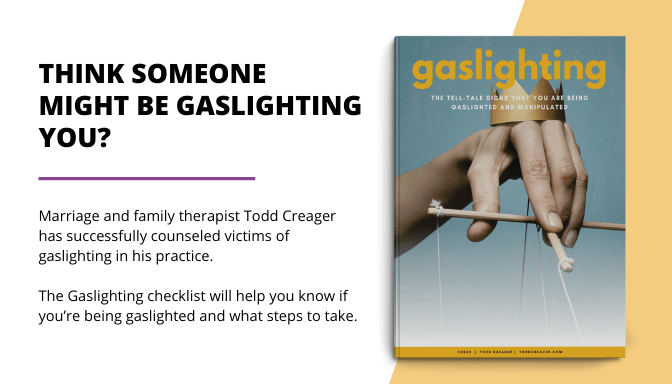
Your first step: download my free checklist to put language to what you’re experiencing.
If this sounds familiar, trust that instinct — and know you don’t have to sort through it alone. For the fuller picture on healing from toxic relationship patterns, my complete guide walks through what comes next.
Frequently Asked Questions
Q: What are the most common signs of gaslighting?
A: Flat denial of events, minimizing your feelings, shifting blame, contradicting your own perceptions, and a persistent feeling of confusion or self-doubt after interactions with the person.
Q: Is gaslighting always intentional?
A: Not always — sometimes it’s a defensive pattern the other person learned themselves rather than a conscious manipulation tactic. The impact on you is real either way, regardless of intent.
Q: How do I know if I’m being gaslit or just overreacting?
A: A persistent, ongoing feeling of confusion and self-doubt after interactions with someone is itself a meaningful sign — healthy relationships don’t typically leave you doubting your grip on reality this consistently.
Q: How do I start recovering from gaslighting?
A: Start by keeping a private factual record of incidents, reconnecting with outside perspectives, and considering professional support to help separate what actually happened from what you’ve been told happened.



Reader Interactions