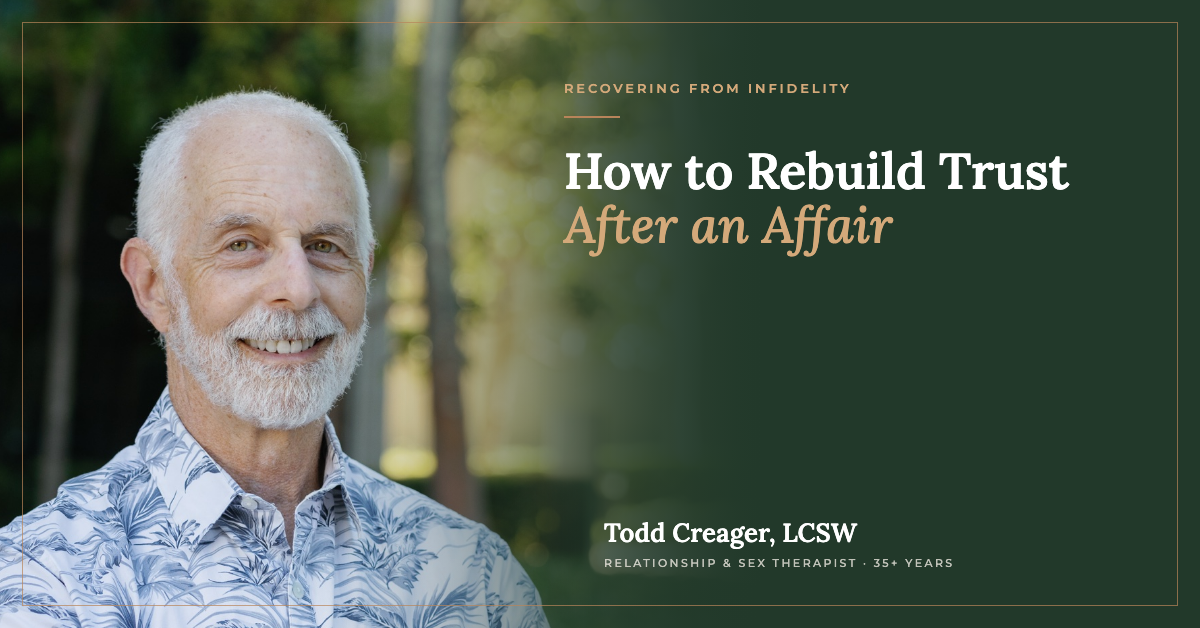

How to Rebuild Trust After an Affair

How to Rebuild Trust After an Affair

Picture of Todd Creager

Todd Creager

Todd Creager, LCSW, LMFT, is a marriage, relationship and sex therapist who helps couples heal from infidelity, betrayal and years of disconnection, so they can build a long, hot marriage instead of ending one.

35+ years in practice. Certified EMDR therapist. Adjunct lecturer, USC School of Social Work. Bestselling author of The Long, Hot Marriage and Love, Sex and Karaoke. Married, happily, for a long time.

Learn more about Todd: https://toddcreager.com/about/

Ready to talk? See how Todd works with couples and individuals or reach out for a 20-minute phone consult.

KEY TAKEAWAYS

Rebuilding trust after an affair follows real mechanics, not good intentions. Here’s what actually works:

  • Trust was broken by actions, so it can only be rebuilt by actions repeated over time — not by words or promises alone.
  • There’s a real difference between agreed-upon transparency and one-sided surveillance, and only one of them rebuilds trust long-term.
  • Most couples see real trust returning somewhere in the one-to-two-year range, often unevenly.
  • The betrayed partner’s job isn’t to “get over it” on a schedule — it’s to notice evidence of change and let it count once it’s actually there.

“I’ll never do it again — you can trust me.” I’ve heard some version of that sentence hundreds of times in my office, said with total sincerity. And I’ve watched it land on a betrayed partner like it means nothing, because it doesn’t — not yet.

I’m Todd Creager, and this is one of the most misunderstood parts of infidelity recovery: trust isn’t a sentence. It’s a pattern, built slowly, and there’s no shortcut around the building.

Why “Just Trust Me” Never Works

Trust was broken by actions, not words — so it can only be rebuilt by actions, repeated, over time. Asking a betrayed partner to simply decide to trust again is asking them to override a nervous system that is currently, correctly, on high alert.

That alert doesn’t switch off because it’s inconvenient. It switches off because the evidence, gathered slowly, tells the body the danger has passed. This is a physiological process as much as an emotional one, which is why willpower alone doesn’t speed it up.

What most people get wrong is treating trust as a decision the betrayed partner makes. It’s closer to a threshold that gets crossed gradually, through hundreds of small, boring, kept promises — not one big gesture.

Transparency vs. Surveillance — They’re Not the Same Thing

There’s a real difference between the two, and couples need to find it together. Transparency is agreed-upon, temporary, and collaborative — open location sharing, open phones, checking in about plans, for a defined season of the relationship.

Surveillance is unilateral, indefinite, and adversarial — secretly tracking, interrogating receipts, treating every late text as evidence. Transparency rebuilds trust. Surveillance, sustained forever, tends to keep both partners stuck in the crisis rather than moving past it.

Most couples need real transparency for months, sometimes over a year — and it’s reasonable for it to loosen gradually as trust returns, not on a fixed calendar. The goal isn’t permanent monitoring. It’s a bridge that gets crossed and then, eventually, taken down.

Signs Trust Is Actually Coming Back

Big declarations don’t rebuild trust. Small, kept promises do — said they’d be home by six, home by six. Said they’d mention a stressful contact with a coworker, mentioned it unprompted. None of these moments feel dramatic. Stacked over months, they’re the entire foundation.

The betrayed partner’s job is not to “get over it” on a schedule, and it’s not to police every move forever. Their real job — when they’re ready, which may take longer than anyone wants — is to start noticing evidence of change and let it count.

The quiet signs matter more than any single conversation: a full day without checking. A hard conversation that happens without the affair being brought up as ammunition. Plans made six months out without either of you silently wondering if you’ll still be together.

What to Do Next

If you’re actively rebuilding trust right now, here’s how to structure it:

  • Agree together on what transparency looks like for the next 90 days — write it down, don’t leave it vague.
  • Track kept promises, even small ones — they’re the evidence your nervous system needs.
  • Set a check-in date to revisit and loosen the transparency agreement as trust grows.
  • If conversations about trust keep going in circles, bring in a therapist rather than looping alone.

Your first step: have one direct conversation this week about what “transparency” means to both of you, specifically.

Trust doesn’t return on anyone’s timeline but its own. If you and your partner want a structured way to rebuild it together rather than guessing, my six-part video series and workbook walks you through it step by step.

Go From Hurting to Happy Today...

When you click the button below, you’ll gain access to my exclusive Healing Infidelity From The Inside Out Guide.

It’s a powerful resource that will support you every step of the way, providing practical guidance and actionable steps toward finding peace within yourself.

healing infidelity from the inside out mock up

Frequently Asked Questions

Q: How long does it take to rebuild trust after an affair?

A: Most couples doing genuine work see real trust returning in the one-to-two-year range, often unevenly, with setbacks after triggers like anniversaries. Anyone promising trust in weeks is selling something.

Q: Is it normal to check my partner’s phone after infidelity?

A: Agreed-upon, temporary transparency is normal and often healthy. Secret, indefinite surveillance tends to keep both partners stuck in crisis rather than helping trust return — the difference is whether it’s collaborative and time-limited.

Q: What rebuilds trust fastest after cheating?

A: Consistency in small things — kept promises, unprompted honesty, showing up when you said you would — rebuilds trust faster than any single grand gesture or apology.

Q: Can trust ever be fully rebuilt after an affair?

A: Many couples report trust that feels as strong or stronger than before, though it’s often described as a different kind of trust — more consciously built, rather than assumed.


Popular Post

Contact Us

How to Rebuild Trust After an Affair

How to Rebuild Trust After an Affair

KEY TAKEAWAYS

Rebuilding trust after an affair follows real mechanics, not good intentions. Here’s what actually works:

  • Trust was broken by actions, so it can only be rebuilt by actions repeated over time — not by words or promises alone.
  • There’s a real difference between agreed-upon transparency and one-sided surveillance, and only one of them rebuilds trust long-term.
  • Most couples see real trust returning somewhere in the one-to-two-year range, often unevenly.
  • The betrayed partner’s job isn’t to “get over it” on a schedule — it’s to notice evidence of change and let it count once it’s actually there.

“I’ll never do it again — you can trust me.” I’ve heard some version of that sentence hundreds of times in my office, said with total sincerity. And I’ve watched it land on a betrayed partner like it means nothing, because it doesn’t — not yet.

I’m Todd Creager, and this is one of the most misunderstood parts of infidelity recovery: trust isn’t a sentence. It’s a pattern, built slowly, and there’s no shortcut around the building.

Why “Just Trust Me” Never Works

Trust was broken by actions, not words — so it can only be rebuilt by actions, repeated, over time. Asking a betrayed partner to simply decide to trust again is asking them to override a nervous system that is currently, correctly, on high alert.

That alert doesn’t switch off because it’s inconvenient. It switches off because the evidence, gathered slowly, tells the body the danger has passed. This is a physiological process as much as an emotional one, which is why willpower alone doesn’t speed it up.

What most people get wrong is treating trust as a decision the betrayed partner makes. It’s closer to a threshold that gets crossed gradually, through hundreds of small, boring, kept promises — not one big gesture.

Transparency vs. Surveillance — They’re Not the Same Thing

There’s a real difference between the two, and couples need to find it together. Transparency is agreed-upon, temporary, and collaborative — open location sharing, open phones, checking in about plans, for a defined season of the relationship.

Surveillance is unilateral, indefinite, and adversarial — secretly tracking, interrogating receipts, treating every late text as evidence. Transparency rebuilds trust. Surveillance, sustained forever, tends to keep both partners stuck in the crisis rather than moving past it.

Most couples need real transparency for months, sometimes over a year — and it’s reasonable for it to loosen gradually as trust returns, not on a fixed calendar. The goal isn’t permanent monitoring. It’s a bridge that gets crossed and then, eventually, taken down.

Signs Trust Is Actually Coming Back

Big declarations don’t rebuild trust. Small, kept promises do — said they’d be home by six, home by six. Said they’d mention a stressful contact with a coworker, mentioned it unprompted. None of these moments feel dramatic. Stacked over months, they’re the entire foundation.

The betrayed partner’s job is not to “get over it” on a schedule, and it’s not to police every move forever. Their real job — when they’re ready, which may take longer than anyone wants — is to start noticing evidence of change and let it count.

The quiet signs matter more than any single conversation: a full day without checking. A hard conversation that happens without the affair being brought up as ammunition. Plans made six months out without either of you silently wondering if you’ll still be together.

What to Do Next

If you’re actively rebuilding trust right now, here’s how to structure it:

  • Agree together on what transparency looks like for the next 90 days — write it down, don’t leave it vague.
  • Track kept promises, even small ones — they’re the evidence your nervous system needs.
  • Set a check-in date to revisit and loosen the transparency agreement as trust grows.
  • If conversations about trust keep going in circles, bring in a therapist rather than looping alone.

Your first step: have one direct conversation this week about what “transparency” means to both of you, specifically.

Trust doesn’t return on anyone’s timeline but its own. If you and your partner want a structured way to rebuild it together rather than guessing, my six-part video series and workbook walks you through it step by step.

Go From Hurting to Happy Today...

When you click the button below, you’ll gain access to my exclusive Healing Infidelity From The Inside Out Guide.

It’s a powerful resource that will support you every step of the way, providing practical guidance and actionable steps toward finding peace within yourself.

healing infidelity from the inside out mock up

Frequently Asked Questions

Q: How long does it take to rebuild trust after an affair?

A: Most couples doing genuine work see real trust returning in the one-to-two-year range, often unevenly, with setbacks after triggers like anniversaries. Anyone promising trust in weeks is selling something.

Q: Is it normal to check my partner’s phone after infidelity?

A: Agreed-upon, temporary transparency is normal and often healthy. Secret, indefinite surveillance tends to keep both partners stuck in crisis rather than helping trust return — the difference is whether it’s collaborative and time-limited.

Q: What rebuilds trust fastest after cheating?

A: Consistency in small things — kept promises, unprompted honesty, showing up when you said you would — rebuilds trust faster than any single grand gesture or apology.

Q: Can trust ever be fully rebuilt after an affair?

A: Many couples report trust that feels as strong or stronger than before, though it’s often described as a different kind of trust — more consciously built, rather than assumed.

Reader Interactions

Leave a Reply

Your email address will not be published. Required fields are marked *