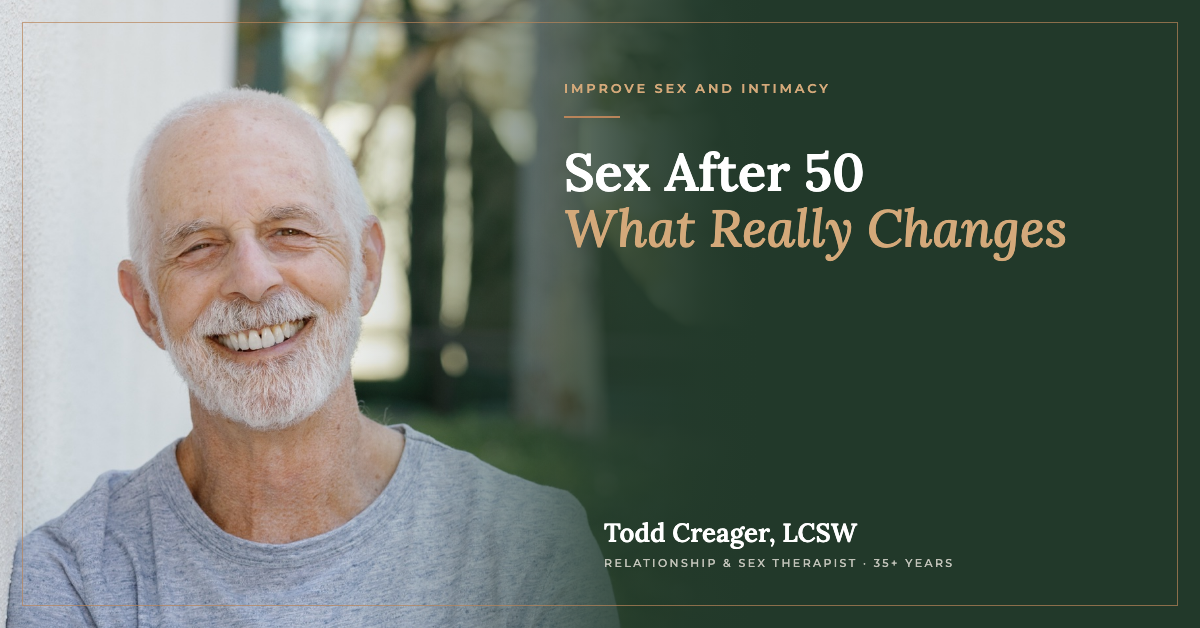

Sex After 50: What Changes and What Doesn't

Sex After 50: What Changes and What Doesn’t

Picture of Todd Creager

Todd Creager

Todd Creager, LCSW, LMFT, is a marriage, relationship and sex therapist who helps couples heal from infidelity, betrayal and years of disconnection, so they can build a long, hot marriage instead of ending one.

35+ years in practice. Certified EMDR therapist. Adjunct lecturer, USC School of Social Work. Bestselling author of The Long, Hot Marriage and Love, Sex and Karaoke. Married, happily, for a long time.

Learn more about Todd: https://toddcreager.com/about/

Ready to talk? See how Todd works with couples and individuals or reach out for a 20-minute phone consult.

KEY TAKEAWAYS

Sex after 50 changes, but it doesn’t have to decline. Here’s what’s actually true:

  • Physical changes like menopause, lower testosterone, or medication side effects are real, but they’re manageable, not a stopping point.
  • Many couples report that sex after 50 becomes more intentional and communicative, not less satisfying.
  • The biggest obstacle is often not the body but the assumption that intimacy is naturally supposed to fade with age.
  • Couples who stay curious and adapt tend to have more fulfilling intimate lives in midlife than couples who quietly give up.

“Is this just what happens now?” is a question I hear often from couples in their 50s, 60s, and beyond, usually said with more resignation than curiosity. I’m Todd Creager, and my honest answer, after decades of working with couples at every stage of life, is: not unless you decide it is.

What Actually Changes Physically — and What That Really Means

Real physical shifts happen: menopause changes hormone levels and can affect lubrication and desire. Testosterone gradually declines in men, which can affect both desire and function. Medications for blood pressure, depression, and other common midlife conditions can affect libido or performance.

These are real, but they’re largely manageable — through medical support, adjusted expectations, and often, a different approach to what intimacy looks like rather than trying to replicate exactly what it was at 25.

What most couples don’t realize: many of these changes are gradual enough that couples adapt without fully noticing, especially if they’re communicating along the way rather than each silently assuming decline is simply inevitable and final.

The Assumption That Does More Damage Than the Biology

The belief that sex is “supposed to” fade with age causes more damage than the actual physical changes. Couples who assume decline is inevitable often stop trying before they need to, which becomes a self-fulfilling prophecy separate from any real physical limitation.

I’ve worked with couples in their 60s and 70s with more intentional, connected intimate lives than they had in their 30s — not despite the changes, but because they stopped assuming and started adapting and communicating instead.

This requires letting go of comparing your current intimate life to your 25-year-old self’s, and instead building something that fits who you both are now — which is often slower, more communicative, and more emotionally connected than it was in youth.

How Couples Build a Fulfilling Intimate Life at This Stage

Start with a medical conversation if physical changes are a real barrier — many issues around lubrication, desire, or function have legitimate medical support available that couples simply haven’t explored yet.

Redefine what intimacy includes at this stage, rather than measuring against an earlier version of your sex life. Slower pacing, more communication about what feels good now, and less performance pressure often lead to more satisfaction, not less.

Stay curious with each other rather than assuming you already know. Bodies change, and so does what feels good — checking in regularly keeps both partners actually informed instead of operating on outdated assumptions.

What to Do Next

If midlife changes are affecting your intimate life, here’s where to start:

  • If physical changes feel significant, start with a conversation with a doctor — many issues have real medical support available.
  • Let go of comparing your current intimate life to an earlier version of yourselves.
  • Have an open conversation about what feels good now, rather than assuming you already know.
  • Adjust pacing and expectations together rather than quietly giving up.

Your first step: one honest conversation about what’s changed and what you’d both like to explore.

Sex after 50 can be genuinely fulfilling — often more so than earlier in life, once assumptions get replaced with communication. I offer sex and relationship therapy in my Huntington Beach office and virtually, anywhere. Book a free consultation. For the fuller picture on rebuilding intimacy, my complete guide walks through what else helps.

For practical guidance on sex and intimacy in midlife, my resources can help.

Frequently Asked Questions

Q: Does sex naturally decline after 50?

A: There are real physical changes, like shifts from menopause or declining testosterone, but decline isn’t automatic or permanent — many couples report more intentional, satisfying intimacy in midlife through communication and adaptation.

Q: How does menopause affect sex drive?

A: Menopause can affect lubrication and desire due to hormonal shifts, but these changes are manageable through medical support and adjusted approaches to intimacy, not a stopping point.

Q: Can medications affect intimacy in midlife?

A: Yes, common medications for blood pressure, depression, and other conditions can affect libido or function. This is worth discussing with a doctor, since alternatives or adjustments are often available.

Q: How do couples keep intimacy alive as they age?

A: By staying curious rather than assuming decline is inevitable, communicating openly about what feels good now, and adjusting pacing and expectations together rather than comparing to an earlier version of their sex life.

Sex After 50: What Changes and What Doesn't

Sex After 50: What Changes and What Doesn’t

KEY TAKEAWAYS

Sex after 50 changes, but it doesn’t have to decline. Here’s what’s actually true:

  • Physical changes like menopause, lower testosterone, or medication side effects are real, but they’re manageable, not a stopping point.
  • Many couples report that sex after 50 becomes more intentional and communicative, not less satisfying.
  • The biggest obstacle is often not the body but the assumption that intimacy is naturally supposed to fade with age.
  • Couples who stay curious and adapt tend to have more fulfilling intimate lives in midlife than couples who quietly give up.

“Is this just what happens now?” is a question I hear often from couples in their 50s, 60s, and beyond, usually said with more resignation than curiosity. I’m Todd Creager, and my honest answer, after decades of working with couples at every stage of life, is: not unless you decide it is.

What Actually Changes Physically — and What That Really Means

Real physical shifts happen: menopause changes hormone levels and can affect lubrication and desire. Testosterone gradually declines in men, which can affect both desire and function. Medications for blood pressure, depression, and other common midlife conditions can affect libido or performance.

These are real, but they’re largely manageable — through medical support, adjusted expectations, and often, a different approach to what intimacy looks like rather than trying to replicate exactly what it was at 25.

What most couples don’t realize: many of these changes are gradual enough that couples adapt without fully noticing, especially if they’re communicating along the way rather than each silently assuming decline is simply inevitable and final.

The Assumption That Does More Damage Than the Biology

The belief that sex is “supposed to” fade with age causes more damage than the actual physical changes. Couples who assume decline is inevitable often stop trying before they need to, which becomes a self-fulfilling prophecy separate from any real physical limitation.

I’ve worked with couples in their 60s and 70s with more intentional, connected intimate lives than they had in their 30s — not despite the changes, but because they stopped assuming and started adapting and communicating instead.

This requires letting go of comparing your current intimate life to your 25-year-old self’s, and instead building something that fits who you both are now — which is often slower, more communicative, and more emotionally connected than it was in youth.

How Couples Build a Fulfilling Intimate Life at This Stage

Start with a medical conversation if physical changes are a real barrier — many issues around lubrication, desire, or function have legitimate medical support available that couples simply haven’t explored yet.

Redefine what intimacy includes at this stage, rather than measuring against an earlier version of your sex life. Slower pacing, more communication about what feels good now, and less performance pressure often lead to more satisfaction, not less.

Stay curious with each other rather than assuming you already know. Bodies change, and so does what feels good — checking in regularly keeps both partners actually informed instead of operating on outdated assumptions.

What to Do Next

If midlife changes are affecting your intimate life, here’s where to start:

  • If physical changes feel significant, start with a conversation with a doctor — many issues have real medical support available.
  • Let go of comparing your current intimate life to an earlier version of yourselves.
  • Have an open conversation about what feels good now, rather than assuming you already know.
  • Adjust pacing and expectations together rather than quietly giving up.

Your first step: one honest conversation about what’s changed and what you’d both like to explore.

Sex after 50 can be genuinely fulfilling — often more so than earlier in life, once assumptions get replaced with communication. I offer sex and relationship therapy in my Huntington Beach office and virtually, anywhere. Book a free consultation. For the fuller picture on rebuilding intimacy, my complete guide walks through what else helps.

For practical guidance on sex and intimacy in midlife, my resources can help.
Frequently Asked Questions

Q: Does sex naturally decline after 50?

A: There are real physical changes, like shifts from menopause or declining testosterone, but decline isn’t automatic or permanent — many couples report more intentional, satisfying intimacy in midlife through communication and adaptation.

Q: How does menopause affect sex drive?

A: Menopause can affect lubrication and desire due to hormonal shifts, but these changes are manageable through medical support and adjusted approaches to intimacy, not a stopping point.

Q: Can medications affect intimacy in midlife?

A: Yes, common medications for blood pressure, depression, and other conditions can affect libido or function. This is worth discussing with a doctor, since alternatives or adjustments are often available.

Q: How do couples keep intimacy alive as they age?

A: By staying curious rather than assuming decline is inevitable, communicating openly about what feels good now, and adjusting pacing and expectations together rather than comparing to an earlier version of their sex life.

Reader Interactions

Leave a Reply

Your email address will not be published. Required fields are marked *