
KEY TAKEAWAYS
Wondering about the signs of sex addiction versus a high libido? Here’s the real distinction:
- High libido alone isn’t addiction — the defining feature is behavior that consistently overrides something the person genuinely values, like their relationship, health, or work.
- Secrecy and escalation — needing more, or riskier behavior, to get the same effect — are stronger indicators than frequency alone.
- Sex addiction often functions as a way to escape emotional pain or emptiness, not simply as a high sex drive.
- It’s treatable, and partners affected by it need their own support, not just the addicted partner working on recovery alone.
“Is this just a high sex drive, or is it something more serious?” is a genuinely important question, and I want to help you think it through clearly rather than reaching for a label too quickly. I’m Todd Creager, and I specialize in working with sex addiction and its impact on relationships.
High Libido vs. Sex Addiction — The Real Difference
High libido, on its own, isn’t a problem — wanting sex frequently doesn’t make someone an addict, even if it’s significantly more than a partner wants. The defining feature of addiction isn’t frequency. It’s whether the behavior consistently overrides something the person genuinely values — their relationship, their health, their work, their own stated priorities.
A useful way to think about it: if someone’s sexual behavior is excessive to the point of interfering with things they value — losing sleep, damaging trust, avoiding responsibilities — that’s a meaningful sign, regardless of the specific frequency involved.
What surprises people most: two people with very similar frequency and intensity of sexual behavior can be in completely different situations — one simply has a high libido, the other is using the behavior compulsively to escape from something. The behavior alone doesn’t tell you which.
The Signs of Sex Addiction Specifically
Secrecy is one of the clearest signs — hiding behavior, lying about time or activity, maintaining a separate life the partner doesn’t know about. Escalation is another — needing increasingly intense or risky material or behavior to get the same effect over time.
Continuing the behavior despite real, known consequences — a partner’s distress, financial cost, risk to health or relationships — is a strong signal, as is repeated failed attempts to stop or cut back on one’s own.
Underneath many of these signs is a common emotional pattern: using the behavior to escape emptiness, numb difficult emotions, or feel more “alive” during periods of stress or disconnection — the sexual behavior functions as a coping mechanism, not simply as desire.
What Actually Helps — For the Addicted Partner and the Relationship
Effective treatment addresses the underlying emotional function of the behavior, not just the behavior itself — what emptiness, stress, or old wound is the behavior actually managing. Behavior-only approaches tend to have higher relapse rates than approaches that address what’s underneath.
Full, honest disclosure to a partner, done carefully and often with professional guidance, is usually necessary for real trust rebuilding, even though it’s one of the hardest steps in the process.
The partner’s healing deserves equal attention. Discovering a partner’s sex addiction is its own kind of betrayal trauma, and partners typically need their own support process, separate from and alongside the addicted partner’s recovery.
What to Do Next
If you’re seeing signs of sex addiction in yourself or a partner, here’s where to start:
- Consider whether the behavior consistently overrides something you genuinely value, more than focusing on frequency alone.
- Notice patterns of secrecy or escalation — these are stronger indicators than desire level itself.
- If you’re the partner, know that your own support matters just as much as the addicted partner’s recovery.
- Reach out for a consultation — for either partner, or both together.
Your first step: book a confidential consultation to talk through what you’re seeing.
Whether this is high libido or something more, clarity helps. I offer specialized sex addiction therapy for individuals and couples, in my Huntington Beach office and virtually. For more on Todd’s background in this area, see his work as an Orange County sex addiction therapist
For the bigger picture on how couples navigate this together, my complete guide to addiction and relationships walks through it.
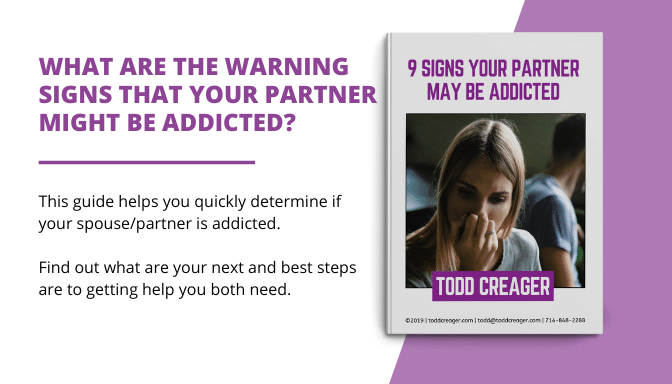
Are you concerned that your partner’s addiction is destroying your relationship?
This guide will help you quickly determine if your spouse/partner is addicted, and determine the next and best steps you need to take so that you can save your relationship.
Frequently Asked Questions
Q: How do I know if it’s sex addiction or just a high sex drive?
A: High libido alone isn’t addiction. The defining feature is whether the behavior consistently overrides something the person genuinely values — their relationship, health, or responsibilities — not the frequency of the behavior itself.
Q: What are the warning signs of sex addiction?
A: Secrecy about behavior, escalation to more intense or risky activity over time, continuing despite known consequences, and repeated failed attempts to stop or cut back on one’s own.
Q: Is sex addiction really about sex, or something else?
A: Often something else underneath — the behavior frequently functions as a way to escape emotional emptiness, stress, or old wounds, rather than being purely about sexual desire.
Q: Does the partner of someone with sex addiction need their own therapy?
A: Yes. Discovering a partner’s sex addiction is its own form of betrayal trauma, and partners typically need dedicated support, separate from and alongside the addicted partner’s recovery process.

Reader Interactions