
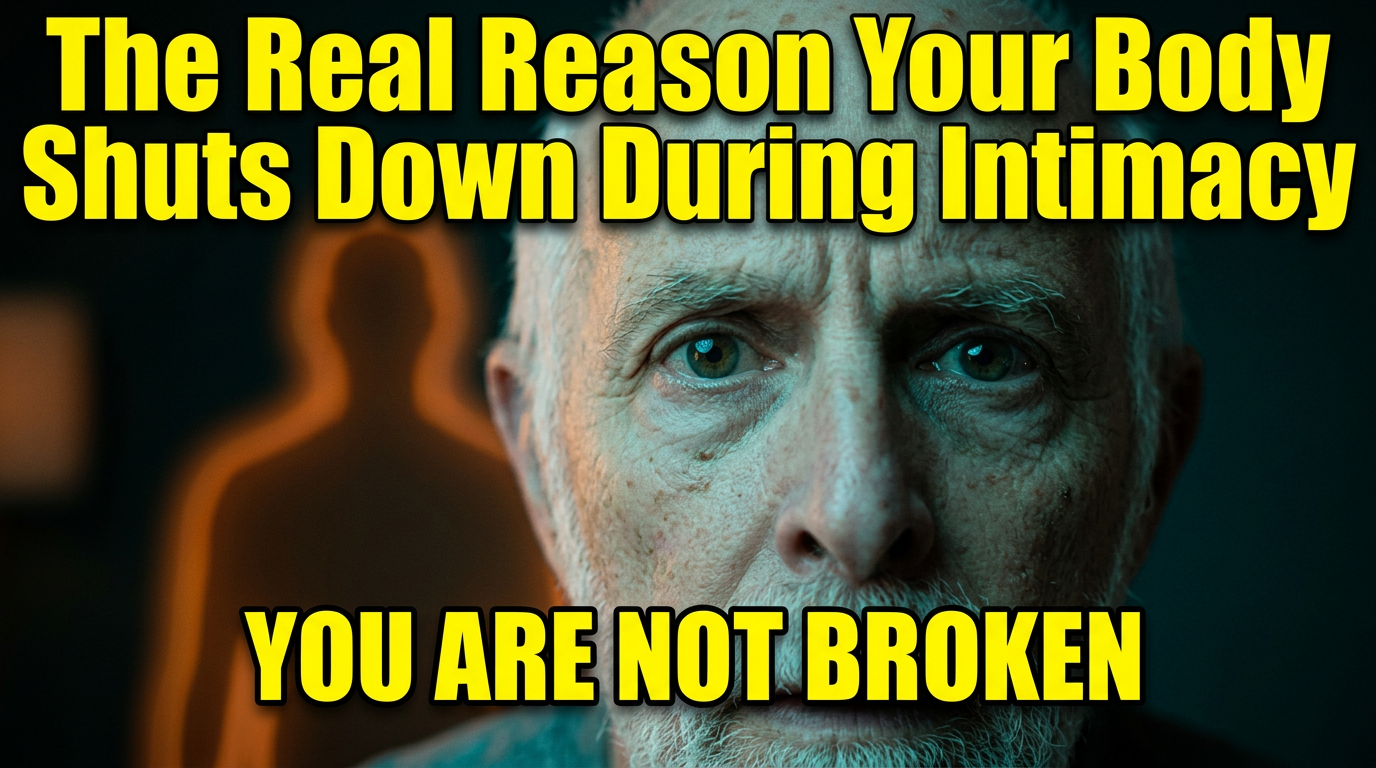
The real reason your body shuts down during intimacy

Why Willpower Fails in Sex and Intimacy

What’s really going on when your body won’t cooperate — and why pushing harder only makes it worse

I’ve worked with thousands of individuals and couples over the years, and there’s one thing I hear more often than almost anything else: “I’ve tried so hard to fix this.”

They’re talking about their sex life. Maybe it’s low desire. Maybe it’s performance anxiety. Maybe it’s a pattern of turning to porn or even infidelity that they can’t seem to stop. And they’ve been using willpower — gritting their teeth, white-knuckling it, forcing themselves to either show up or stop — and it’s not working.

Here’s what I want you to know right away: willpower doesn’t fail because you’re weak. Willpower fails because it’s the wrong tool for the job. And understanding why changes everything.

When You Want to Be Intimate, But Your Body Says No

Let me paint a picture that might feel familiar. You care about your partner. You want to connect with them physically. But something happens — or doesn’t happen. You can’t maintain an erection. You can’t reach orgasm. Ejaculation happens too quickly, or not at all. Your desire just isn’t there.

So what do you do? You try harder. You tell yourself, “This time it’ll be different.” You psych yourself up. And when it doesn’t work, the anxiety gets worse. The shame gets heavier. And the cycle tightens.

I want to offer a completely different way of looking at this. In my practice, I use an approach called Internal Family Systems, or IFS. And one of the most important things IFS teaches us is this:

You’re not broken. There’s a part of you that’s trying to protect you.

That might sound surprising. How could losing your erection be protective? How could shutting down sexually be your body looking out for you? But stay with me here.

We’re Not Just One Thing — We’re Made Up of Parts

Internal Family Systems is built on the idea that all of us are made up of different parts. Not in a pathological way — this is normal human psychology. We all have a core Self (capital S) that’s wise, compassionate, courageous, curious, and calm. That Self is always there inside you.

But we also have protective parts. These parts developed for good reasons, usually early in life, and their whole purpose is to keep us from feeling pain we once couldn’t handle.

In IFS, there are two main types of protective parts:

Managers try to prevent pain before it happens. They plan, they control, they shut things down preemptively. In the bedroom, a manager is the part that lowers your desire, takes away your erection, or blocks orgasm. It’s saying, “If we don’t go there, we can’t get hurt.”

Firefighters show up after the pain has already started to surface. They react fast and urgently, doing whatever it takes to numb or extinguish that pain. In the sexual arena, a firefighter might drive someone toward compulsive porn use, affairs, or hypersexual behavior — anything to put out the emotional fire.

And underneath both of these? Wounded parts — sometimes called exiles. These are the younger, more vulnerable parts of you that carry shame, fear, inadequacy, or old emotional injuries. The managers and firefighters exist to keep these wounded parts from being felt.

Why Willpower Can’t Reach What’s Really Happening

Now think about what willpower actually does. It says to these parts: “Stop it. Perform. Don’t look at that. Be normal.”

But these parts aren’t acting up because they’re misbehaving. They’re acting up because they’re scared. They’re protecting something. Willpower doesn’t address what they’re protecting — it just tries to override them. And that’s a battle you’re going to lose, because those parts are deeply wired into your nervous system.

I see this every week in my office. A man can’t maintain an erection with his wife, so he tells himself, “Just relax, just focus.” But the part that’s shutting him down isn’t listening to logic. It’s guarding him from the intense vulnerability of being truly seen and possibly coming up short. No amount of self-talk can override that kind of protection.

On the other side, I work with people who are desperately trying to stop using porn or to stop having affairs. They feel tremendous guilt. They make promises to themselves. And for a while, willpower might hold. But then something happens — a failure at work, a fight with their partner, a wave of old shame — and the firefighter part rushes in. The compulsive behavior returns, and the person feels even worse than before.

I have a client right now whose pattern of infidelity started at the exact time he began experiencing significant setbacks at work. That’s not a coincidence. The affair was a firefighter response — someone gave him attention and validation, and that extinguished, at least temporarily, the unbearable feeling of failure. Willpower couldn’t touch that because it wasn’t addressing the wound underneath.

The Bedroom Is One of the Most Vulnerable Places We Go

This is something I don’t think gets talked about enough. We carry all these ideas about how things are supposed to go in bed. And when our body doesn’t cooperate with those expectations, there’s enormous opportunity for shame to surface.

Shame is one of the most painful human emotions. And the bedroom, because it asks so much of us emotionally — to be open, present, physically naked and responsive — is where our old shame wounds are most likely to get activated.

So of course your protective parts show up there. They’re doing their job. The question isn’t, “How do I force them to stop?” The question is, “What are they trying to protect me from?”

A Quick Note on Physical Causes

I always want to be honest about this: sometimes there’s a hormonal issue. Sometimes a medication side effect is involved. Those are real, and they deserve attention. If you haven’t had a thorough medical evaluation, that’s a good starting point.

But in my experience, once physical factors have been ruled out or addressed, the issue is almost always relational and emotional at its core. And that’s actually good news, because it means there’s a clear path forward.

What Actually Works: Self-Led Sexuality

If willpower doesn’t work, what does?

In my work, I help people move toward what I call self-led sexuality. This means that instead of your managers or firefighters running the show in the bedroom, your true Self — that wise, calm, compassionate core of who you are — is in the lead.

And the first step toward self-led sexuality is probably not what you’d expect. It’s not about performing better or resisting harder. It’s about getting curious.

Curious about the part of you that’s causing the problem.

I know that sounds counterintuitive. When something is making your life miserable — when you can’t be present sexually with your partner, or when you keep acting out in ways that wreck your relationship — the last thing you want to do is welcome that part. You want to get rid of it. You want to fight it.

But here’s what decades of clinical work have taught me: fighting these parts doesn’t free you. Understanding them does.

How This Looks in Practice

When I work with someone using IFS, often alongside EMDR (Eye Movement Desensitization and Reprocessing), we begin by helping them notice and name the parts that are showing up.

We start to separate the person from the part. Because when your body won’t perform, it can feel like all of you is broken. But when you can say, “There’s a part of me that’s shutting down right now, and it’s scared,” something shifts. You’re no longer the problem. You’re someone who has a part that’s trying to protect you. And that creates room to breathe.

From that place of a little more spaciousness, we can get curious about the part. What is it afraid of? What would happen if it stepped back? When did it first start protecting you this way? Often, these parts are younger parts — they carry memories of times when you felt ashamed or inadequate or overwhelmed. And they’ve been working overtime ever since.

The goal is to help these parts unburden what they’ve been carrying. When that happens — when a wounded part no longer holds all that old shame or fear — the protective parts don’t need to work so hard. They can relax. And your true Self can lead in the bedroom and in the relationship.

A Word About Shame and Judgment

If you’re someone who’s been using porn compulsively, or if you’ve had an affair, I want to be clear about something. I’m not saying those behaviors are okay. Infidelity causes real, deep pain to the person who’s been betrayed. That’s undeniable.

But judging yourself into the ground hasn’t fixed it, has it? If shame and self-criticism were going to solve this, they would have done it by now.

What I’m offering is a different lens. When we can look at the firefighter part — the part that drove you toward that behavior — with some curiosity instead of pure contempt, we can finally get to what’s underneath. And that’s where the real healing happens. Not through willpower. Through understanding.

What You Can Start Doing Today

You don’t have to wait until you’re in a therapist’s office to begin this work, though professional support makes a real difference with the harder layers. Here are some honest starting points:

Notice without reacting. The next time you feel yourself shutting down sexually or feel pulled toward a compulsive behavior, pause. Instead of fighting it, just notice. “There’s a part of me doing this right now.” That simple shift — from “I’m broken” to “a part of me is activated” — is more powerful than you might think.

Get curious, not critical. Ask that part, gently: “What are you trying to protect me from?” You might not get an answer right away. That’s fine. The curiosity itself starts to change the relationship between you and that part.

Stop making it a willpower contest. This is maybe the most important thing. If you keep framing this as something you need to force your way through, you’ll keep losing. Not because you’re weak — because force doesn’t heal fear.

Consider working with a therapist trained in IFS or EMDR. These approaches get to the root-level wounds relatively quickly compared to traditional talk therapy alone. I combine both in my practice because I’ve seen how effective they are together — the healing happens from the inside out.

Why This Matters for Your Relationship

Sexual intimacy isn’t just physical. It’s one of the ways we feel most connected to our partner — and most exposed. When things aren’t working in the bedroom, it affects the entire relationship. Resentment builds. Distance grows. Both people start to feel like something fundamental is wrong.

But when you understand that what’s happening isn’t a failure — it’s a protection — you can approach each other with more compassion. Couples I’ve worked with who learn this framework together often tell me that it’s the first time they’ve been able to talk about their sexual struggles without blame or defensiveness.

That’s Self-led relating. And it’s where real intimacy lives.

You’re Not Broken. You’re Protected.

If you take one thing from this article, let it be this: what’s happening in your body — whether it’s shutting down or acting out — isn’t evidence that something is wrong with you. It’s evidence that something inside you is trying to keep you safe from pain you once couldn’t handle.

The path forward isn’t about pushing harder. It’s about turning inward with curiosity, getting to know those parts, and helping them let go of what they’ve been carrying. When that happens, more of your true Self can show up — in the bedroom, in your relationship, and in your life.

This is the kind of work I do every day with individuals and couples. And I’ve seen it change people’s lives. If you’re ready to stop fighting yourself and start understanding yourself, I’d love to help.

Rediscover the Spark: Fall Back in Love with Your Partner!

Have you ever felt like the flame in your relationship is flickering? You’re not alone. It’s common for even the most passionate romances to hit a lull.

But what if you could reignite that spark and fall deeply in love all over again?

Don’t let your love story lose its luster. Click now to access “Rekindling Romance: The Art of Falling Back in Love” and start your journey to a more fulfilling, passionate relationship today! 🌟💕

Popular Post

Contact Us

The real reason your body shuts down during intimacy

Why Willpower Fails in Sex and Intimacy

What’s really going on when your body won’t cooperate — and why pushing harder only makes it worse

I’ve worked with thousands of individuals and couples over the years, and there’s one thing I hear more often than almost anything else: “I’ve tried so hard to fix this.”

They’re talking about their sex life. Maybe it’s low desire. Maybe it’s performance anxiety. Maybe it’s a pattern of turning to porn or even infidelity that they can’t seem to stop. And they’ve been using willpower — gritting their teeth, white-knuckling it, forcing themselves to either show up or stop — and it’s not working.

Here’s what I want you to know right away: willpower doesn’t fail because you’re weak. Willpower fails because it’s the wrong tool for the job. And understanding why changes everything.

When You Want to Be Intimate, But Your Body Says No

Let me paint a picture that might feel familiar. You care about your partner. You want to connect with them physically. But something happens — or doesn’t happen. You can’t maintain an erection. You can’t reach orgasm. Ejaculation happens too quickly, or not at all. Your desire just isn’t there.

So what do you do? You try harder. You tell yourself, “This time it’ll be different.” You psych yourself up. And when it doesn’t work, the anxiety gets worse. The shame gets heavier. And the cycle tightens.

I want to offer a completely different way of looking at this. In my practice, I use an approach called Internal Family Systems, or IFS. And one of the most important things IFS teaches us is this:

You’re not broken. There’s a part of you that’s trying to protect you.

That might sound surprising. How could losing your erection be protective? How could shutting down sexually be your body looking out for you? But stay with me here.

We’re Not Just One Thing — We’re Made Up of Parts

Internal Family Systems is built on the idea that all of us are made up of different parts. Not in a pathological way — this is normal human psychology. We all have a core Self (capital S) that’s wise, compassionate, courageous, curious, and calm. That Self is always there inside you.

But we also have protective parts. These parts developed for good reasons, usually early in life, and their whole purpose is to keep us from feeling pain we once couldn’t handle.

In IFS, there are two main types of protective parts:

Managers try to prevent pain before it happens. They plan, they control, they shut things down preemptively. In the bedroom, a manager is the part that lowers your desire, takes away your erection, or blocks orgasm. It’s saying, “If we don’t go there, we can’t get hurt.”

Firefighters show up after the pain has already started to surface. They react fast and urgently, doing whatever it takes to numb or extinguish that pain. In the sexual arena, a firefighter might drive someone toward compulsive porn use, affairs, or hypersexual behavior — anything to put out the emotional fire.

And underneath both of these? Wounded parts — sometimes called exiles. These are the younger, more vulnerable parts of you that carry shame, fear, inadequacy, or old emotional injuries. The managers and firefighters exist to keep these wounded parts from being felt.

Why Willpower Can’t Reach What’s Really Happening

Now think about what willpower actually does. It says to these parts: “Stop it. Perform. Don’t look at that. Be normal.”

But these parts aren’t acting up because they’re misbehaving. They’re acting up because they’re scared. They’re protecting something. Willpower doesn’t address what they’re protecting — it just tries to override them. And that’s a battle you’re going to lose, because those parts are deeply wired into your nervous system.

I see this every week in my office. A man can’t maintain an erection with his wife, so he tells himself, “Just relax, just focus.” But the part that’s shutting him down isn’t listening to logic. It’s guarding him from the intense vulnerability of being truly seen and possibly coming up short. No amount of self-talk can override that kind of protection.

On the other side, I work with people who are desperately trying to stop using porn or to stop having affairs. They feel tremendous guilt. They make promises to themselves. And for a while, willpower might hold. But then something happens — a failure at work, a fight with their partner, a wave of old shame — and the firefighter part rushes in. The compulsive behavior returns, and the person feels even worse than before.

I have a client right now whose pattern of infidelity started at the exact time he began experiencing significant setbacks at work. That’s not a coincidence. The affair was a firefighter response — someone gave him attention and validation, and that extinguished, at least temporarily, the unbearable feeling of failure. Willpower couldn’t touch that because it wasn’t addressing the wound underneath.

The Bedroom Is One of the Most Vulnerable Places We Go

This is something I don’t think gets talked about enough. We carry all these ideas about how things are supposed to go in bed. And when our body doesn’t cooperate with those expectations, there’s enormous opportunity for shame to surface.

Shame is one of the most painful human emotions. And the bedroom, because it asks so much of us emotionally — to be open, present, physically naked and responsive — is where our old shame wounds are most likely to get activated.

So of course your protective parts show up there. They’re doing their job. The question isn’t, “How do I force them to stop?” The question is, “What are they trying to protect me from?”

A Quick Note on Physical Causes

I always want to be honest about this: sometimes there’s a hormonal issue. Sometimes a medication side effect is involved. Those are real, and they deserve attention. If you haven’t had a thorough medical evaluation, that’s a good starting point.

But in my experience, once physical factors have been ruled out or addressed, the issue is almost always relational and emotional at its core. And that’s actually good news, because it means there’s a clear path forward.

What Actually Works: Self-Led Sexuality

If willpower doesn’t work, what does?

In my work, I help people move toward what I call self-led sexuality. This means that instead of your managers or firefighters running the show in the bedroom, your true Self — that wise, calm, compassionate core of who you are — is in the lead.

And the first step toward self-led sexuality is probably not what you’d expect. It’s not about performing better or resisting harder. It’s about getting curious.

Curious about the part of you that’s causing the problem.

I know that sounds counterintuitive. When something is making your life miserable — when you can’t be present sexually with your partner, or when you keep acting out in ways that wreck your relationship — the last thing you want to do is welcome that part. You want to get rid of it. You want to fight it.

But here’s what decades of clinical work have taught me: fighting these parts doesn’t free you. Understanding them does.

How This Looks in Practice

When I work with someone using IFS, often alongside EMDR (Eye Movement Desensitization and Reprocessing), we begin by helping them notice and name the parts that are showing up.

We start to separate the person from the part. Because when your body won’t perform, it can feel like all of you is broken. But when you can say, “There’s a part of me that’s shutting down right now, and it’s scared,” something shifts. You’re no longer the problem. You’re someone who has a part that’s trying to protect you. And that creates room to breathe.

From that place of a little more spaciousness, we can get curious about the part. What is it afraid of? What would happen if it stepped back? When did it first start protecting you this way? Often, these parts are younger parts — they carry memories of times when you felt ashamed or inadequate or overwhelmed. And they’ve been working overtime ever since.

The goal is to help these parts unburden what they’ve been carrying. When that happens — when a wounded part no longer holds all that old shame or fear — the protective parts don’t need to work so hard. They can relax. And your true Self can lead in the bedroom and in the relationship.

A Word About Shame and Judgment

If you’re someone who’s been using porn compulsively, or if you’ve had an affair, I want to be clear about something. I’m not saying those behaviors are okay. Infidelity causes real, deep pain to the person who’s been betrayed. That’s undeniable.

But judging yourself into the ground hasn’t fixed it, has it? If shame and self-criticism were going to solve this, they would have done it by now.

What I’m offering is a different lens. When we can look at the firefighter part — the part that drove you toward that behavior — with some curiosity instead of pure contempt, we can finally get to what’s underneath. And that’s where the real healing happens. Not through willpower. Through understanding.

What You Can Start Doing Today

You don’t have to wait until you’re in a therapist’s office to begin this work, though professional support makes a real difference with the harder layers. Here are some honest starting points:

Notice without reacting. The next time you feel yourself shutting down sexually or feel pulled toward a compulsive behavior, pause. Instead of fighting it, just notice. “There’s a part of me doing this right now.” That simple shift — from “I’m broken” to “a part of me is activated” — is more powerful than you might think.

Get curious, not critical. Ask that part, gently: “What are you trying to protect me from?” You might not get an answer right away. That’s fine. The curiosity itself starts to change the relationship between you and that part.

Stop making it a willpower contest. This is maybe the most important thing. If you keep framing this as something you need to force your way through, you’ll keep losing. Not because you’re weak — because force doesn’t heal fear.

Consider working with a therapist trained in IFS or EMDR. These approaches get to the root-level wounds relatively quickly compared to traditional talk therapy alone. I combine both in my practice because I’ve seen how effective they are together — the healing happens from the inside out.

Why This Matters for Your Relationship

Sexual intimacy isn’t just physical. It’s one of the ways we feel most connected to our partner — and most exposed. When things aren’t working in the bedroom, it affects the entire relationship. Resentment builds. Distance grows. Both people start to feel like something fundamental is wrong.

But when you understand that what’s happening isn’t a failure — it’s a protection — you can approach each other with more compassion. Couples I’ve worked with who learn this framework together often tell me that it’s the first time they’ve been able to talk about their sexual struggles without blame or defensiveness.

That’s Self-led relating. And it’s where real intimacy lives.

You’re Not Broken. You’re Protected.

If you take one thing from this article, let it be this: what’s happening in your body — whether it’s shutting down or acting out — isn’t evidence that something is wrong with you. It’s evidence that something inside you is trying to keep you safe from pain you once couldn’t handle.

The path forward isn’t about pushing harder. It’s about turning inward with curiosity, getting to know those parts, and helping them let go of what they’ve been carrying. When that happens, more of your true Self can show up — in the bedroom, in your relationship, and in your life.

This is the kind of work I do every day with individuals and couples. And I’ve seen it change people’s lives. If you’re ready to stop fighting yourself and start understanding yourself, I’d love to help.

Rediscover the Spark: Fall Back in Love with Your Partner!

Have you ever felt like the flame in your relationship is flickering? You’re not alone. It’s common for even the most passionate romances to hit a lull.

But what if you could reignite that spark and fall deeply in love all over again?

Don’t let your love story lose its luster. Click now to access “Rekindling Romance: The Art of Falling Back in Love” and start your journey to a more fulfilling, passionate relationship today! 🌟💕
Reader Interactions

Leave a Reply

Your email address will not be published. Required fields are marked *